September 14, 2026 • Marisol Vane • 10 min reading time • Prices verified June 4, 2026
Slow Feeder Bowls for Senior and Recovering Dogs: When Slowing Down Eating Is a Medical Priority
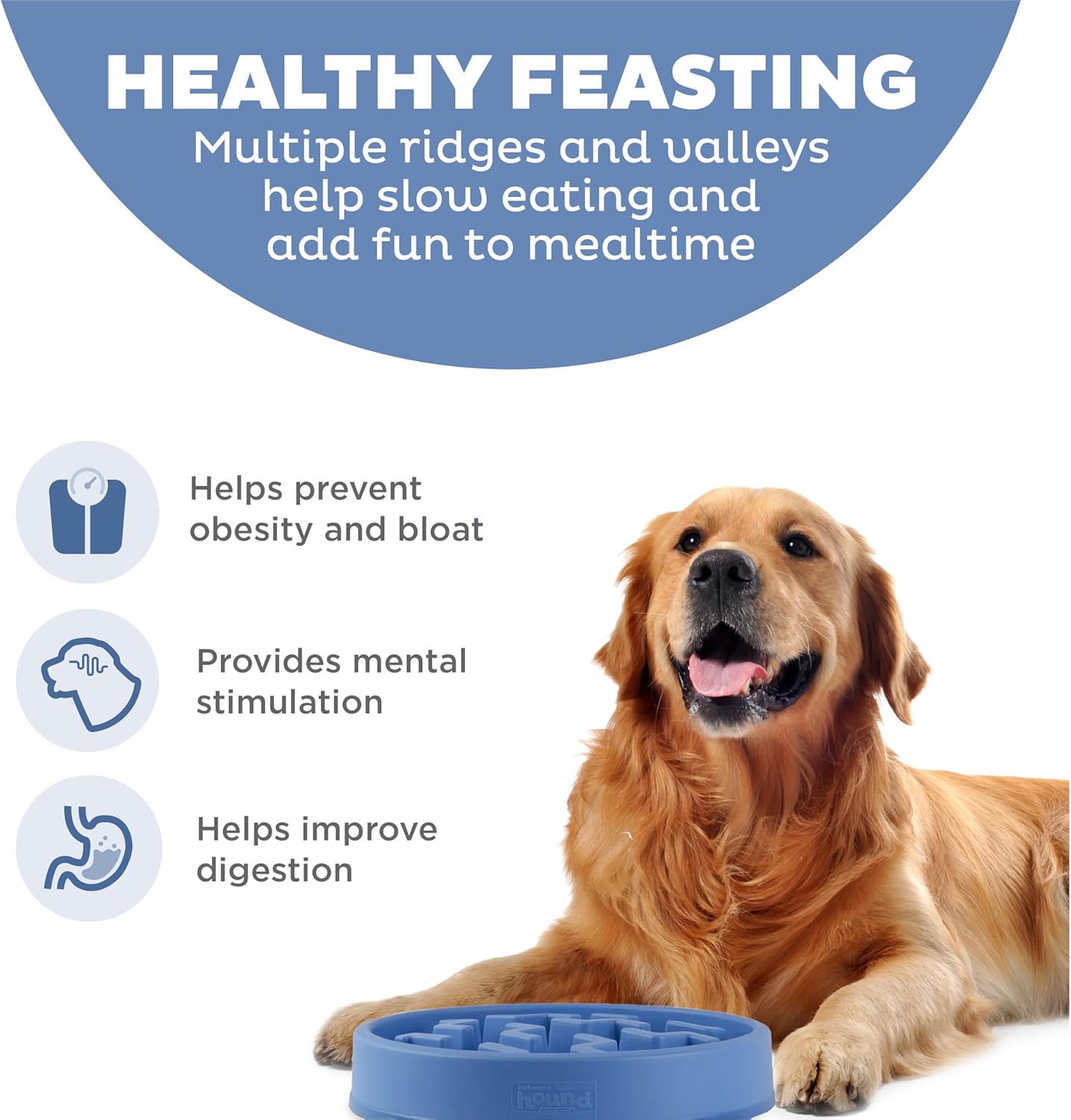
If your dog has recently started inhaling food like they’re racing a timer, you’ve probably already googled whether that’s dangerous. The short answer: it can be. Rapid eating — sometimes called “gulping” or “competitive eating behavior” — forces large amounts of air into the stomach alongside food. In predisposed breeds, that air can trigger a condition called gastric dilatation-volvulus (GDV), a life-threatening stomach twist that requires emergency surgery. Even without GDV risk, speed-eating causes regurgitation, choking, and chronic digestive discomfort. A slow feeder bowl is exactly what it sounds like: a bowl engineered with ridges, mazes, or raised pillars that force a dog to eat around obstacles, physically reducing the volume of food they can consume in a single mouthful. For most healthy dogs, a slow feeder is a useful lifestyle tool. For senior dogs, post-surgical patients, and dogs on medications that spike hunger, it is something closer to a medical intervention.
This guide is for owners and practitioners who already understand why slowing intake matters and need to make a specific, defensible product decision — matching bowl design, material, and geometry to a dog’s clinical situation.
| EDITOR'S PICKSlow Feeder Dog Bowl-2Cups for… | Mid-tierOutward Hound Fun Feeder Slo Bo… | Budget pickStella & Chewy's Human-Grade Gr… | |
|---|---|---|---|
| Capacity | 2 cups | 4 cups | — |
| Material | Stainless steel | — | — |
| Non-slip base | ✓ | ✓ | — |
| Slow-feed design | ✓ | ✓ | — |
| Form | Bowl (1-pack) | Bowl (1-pack) | Liquid topper |
| Size | Medium | Large | 16 fl oz |
| Price | $25.64 | $11.96 | $7.98 |
| See on Amazon → | See on Amazon → | See on Amazon → |
Why “Slowing Down Eating” Is a Medical Priority, Not a Preference
The risk calculus here is not uniform. Understanding which conditions elevate urgency helps you recommend or select with precision.
GDV (Bloat) Risk. Per the AKC’s overview of bloat in dogs, large and giant breeds with deep, narrow chest cavities — Great Danes, German Shepherds, Standard Poodles, Irish Setters — carry statistically elevated GDV risk. Tufts Your Dog’s reporting on GDV has consistently noted that while the evidence linking eating speed specifically to GDV remains correlational rather than causal, reducing air ingestion during meals is a low-cost, zero-risk intervention that most veterinary internists endorse. The conservative clinical position: if your dog is GDV-predisposed, a slow feeder costs nothing compared to emergency bloat surgery, which VCA Animal Hospitals estimates in the range of $2,000–$5,000.
Regurgitation and Megaesophagus. PetMD’s clinical overview of megaesophagus — a condition where the esophagus loses muscle tone and cannot properly move food to the stomach — identifies eating speed and meal volume as primary triggers for regurgitation episodes. Dogs with confirmed or suspected megaesophagus require slowed intake AND upright positioning post-meal (Bailey chairs are the standard tool for the latter), but a slow feeder bowl addresses the intake-rate component directly.
Steroid-Induced Polyphagia. Prednisone and other corticosteroids commonly prescribed for allergies, immune conditions, and inflammatory disease cause polyphagia — dramatically increased appetite and frantic, compulsive eating. This is a widely documented side effect. Owners managing dogs on long-term steroid protocols frequently report that animals who were previously relaxed eaters become genuinely dangerous around their bowls, gulping so fast they choke. The MateeyLife slow feeder line draws a notably specific reviewer cohort: owners of steroid-medicated dogs who bought multiple units because one bowl wasn’t creating enough resistance for a dog eating with unusual desperation. That’s a real niche, and it matters for bowl selection — a dog on prednisone typically needs maximum resistance geometry, not a gentle starter maze.
Post-Surgical Recovery. Dogs recovering from throat, esophageal, or upper-GI surgery present the most complex case. The answer here is not always “yes, use a slow feeder” — see the FAQ section below for the full clinical nuance.
By the Numbers
| Scenario | Recommended Bowl Geometry | Priority Feature |
|---|---|---|
| GDV-predisposed large breed | Wide, shallow maze | Stability; anti-tip base |
| Steroid polyphagia (max resistance needed) | Deep multi-lobe or spiral design | High obstacle density |
| Choking/regurgitation history | Shallow raised pillars, ceramic | Easy cleaning; no sharp edges |
| Post-surgical esophageal recovery | Consult surgeon first; lick mat may substitute | Ultra-low resistance |
| Senior with arthritis | Elevated or wide-base flat maze | Neck comfort; non-slip base |
Matching Bowl Design to the Dog in Front of You
Material First: Ceramic, Stainless, or Plastic
This is the decision most owners skip, and it’s often the one that generates the most friction post-purchase.
Ceramic is the standout choice for dogs with confirmed or suspected plastic sensitivities — contact dermatitis and nasal fold irritation from plastic bowls is documented in dogs, particularly light-pigmented breeds. The LE TAUCI ceramic slow feeder bowl has accumulated a remarkably specific reviewer narrative: owners of adopted street dogs who arrived with choking episodes on day one. These are dogs with no prior relationship to structured feeding, often eating as though food might disappear, and the ceramic bowl’s weighted stability and moderately deep ridge pattern provided immediate, visible slowing without the bowl skating across the floor. Ceramic is heavier (a feature with large dogs), dishwasher safe in most designs, and contains no plasticizers or dyes that contact the food surface. The tradeoff: it chips if dropped, and the ridge geometry in most ceramic designs is less extreme than the best plastic mazes — appropriate for moderate resistance needs, not maximum-resistance scenarios.
Stainless steel is the go-to for practitioners managing multiple dogs or kennel environments. The double-wall stainless designs reviewed by owners of large breeds — a 74-pound German Shepherd on a 2-cup meal is the clearest documented large-breed use case in the category — hold up to daily commercial dishwasher cycles, resist bacterial biofilm better than any plastic, and don’t retain odors. The maze geometry in stainless feeders is generally shallower than plastic options, which suits large-breed dogs well: a dog eating 2+ cups per meal needs a bowl wide enough to access the full portion, and deep narrow grooves create frustration rather than behavioral slowing. Stability is excellent by weight alone.
Plastic — specifically the Outward Hound Fun Feeder line — dominates this category in terms of sales volume, variety, and the most frequently cited owner observation in the category: an immediate, visible difference in eating speed from the very first use. That’s not a subtle effect. Owners report the change is obvious within the first meal, not after a week of adjustment. The Fun Feeder’s ridge-and-valley geometry creates genuine mechanical resistance across a wide surface area, and it’s available in configurations ranging from a gentle swirl to a dense multilobe pattern that significantly extends meal duration. The honest tradeoff: plastic deep-groove designs are the hardest category to clean, and cleaning difficulty is the single most repeated complaint across aggregated reviews. Address this before purchase, not after (see the FAQ below).
Geometry and Resistance Level
Not all mazes are equal. Think of resistance in three tiers:
- Low resistance (gentle swirl, wide-channel designs): appropriate for senior dogs with reduced dexterity, dogs recovering from dental procedures, or first-time slow feeder introductions for anxious dogs.
- Medium resistance (interlocking ridges, moderate pillar density): the right starting point for most GDV-predisposed dogs and dogs with regurgitation history.
- Maximum resistance (dense multilobe, spiral-within-spiral, deep narrow channels): indicated for steroid polyphagia and extremely competitive eaters. The MateeyLife bowls operate in this tier — the reviewer narrative of buying multiple units for steroid dogs specifically reflects the bowl’s ability to maintain resistance even as dogs learn to navigate familiar patterns. Rotating between two bowl designs can prevent “pattern learning,” where a dog figures out the maze and speeds back up over weeks.
Size and Stability
A 74-pound German Shepherd eating from a 2-cup meal needs a bowl that can physically contain that volume across a spread-out maze without stacking food above the ridge height — because stacked food negates the resistance entirely. Width matters more than depth for large breeds. Anti-tip bases and non-slip feet (silicone rings or rubberized bottoms) are non-negotiable for any dog who pressure-eats; a bowl that slides or tips becomes a conventional flat bowl the moment it moves.
Frequently Asked Questions
Will a slow feeder bowl actually prevent bloat, or just slow eating?
The honest answer is “slow eating” — with important context. Per VCA Animal Hospitals’ clinical documentation on GDV, the relationship between eating speed and bloat risk is supported but not fully established as direct causation. What is clear: rapid air ingestion during eating is a contributing factor, and slow feeders mechanically reduce that air intake. They are a risk-reduction tool, not a prevention guarantee. No bowl eliminates GDV risk in predisposed breeds, and deep-chested large-breed owners should discuss prophylactic gastropexy with their veterinarian independently of any bowl decision.
What slow feeder material is safest for a dog with plastic allergies or sensitivities?
Ceramic or stainless steel. Both are inert food-contact surfaces with no plasticizers, BPA, or surface dyes that contact the dog’s muzzle and tongue during eating. The LE TAUCI ceramic bowl is the most reviewed option in this niche. If stainless is preferred, confirm the bowl is 304 food-grade stainless (most reputable brands specify this) rather than lower-grade alloys.
My dog on prednisone is eating dangerously fast — which bowl design creates the most resistance?
Maximum-resistance geometry: the dense multilobe and deep spiral designs. The MateeyLife slow feeder bowls specifically attract this reviewer demographic, and the pattern of owners buying multiple units to rotate is worth taking seriously — steroid dogs can learn a single maze layout and partially defeat it over time. Rotating between two high-resistance designs every few weeks maintains effectiveness. For dogs on long-term steroid protocols, also discuss meal frequency with your veterinarian — splitting daily ration into three smaller meals reduces per-meal volume and independently reduces gulp risk.
How do I clean the deep grooves of a plastic maze bowl without a dishwasher?
A bottle brush — specifically a narrow-tip bottle brush with angled bristles — is the most consistently recommended manual cleaning tool for deep-groove plastic feeders. Soak the bowl in warm water for five minutes post-meal to loosen food residue before brushing. For kibble-fed dogs, residue is drier and brushes out readily; for raw or wet food, the soak step is non-negotiable. If your bowl is labeled dishwasher safe (the Outward Hound Fun Feeder is; confirm your specific model’s care instructions), top-rack dishwasher cycling is the most effective sanitation option and eliminates the cleaning complaint almost entirely.
Is a slow feeder bowl appropriate for a dog recovering from throat or esophageal surgery?
Not necessarily, and this requires direct veterinary guidance rather than a product decision. Post-esophageal surgery patients often need ultra-soft, semi-liquid food delivered with minimal physical manipulation of the esophageal tissue — and the reaching and maneuvering required to eat from a maze bowl may place mechanical stress on surgical sites. In many post-surgical protocols, a lick mat with moistened food spread flat is a better interim tool than any slow feeder bowl: it provides intake slowing (the food must be licked off a textured surface rather than scooped) with minimal neck movement and no obstacle navigation. Confirm the specific protocol with the treating surgeon before introducing any bowl change.
The Decision Rule
If the dog is GDV-predisposed and otherwise healthy: start with a medium-resistance stainless or wide-format plastic maze, prioritize anti-tip stability, and confirm the bowl is wide enough to contain the full meal volume without stacking.
If the dog has plastic sensitivity or a history of choking on arrival from a shelter environment: ceramic first, specifically the LE TAUCI for its reviewed stability and ridge geometry.
If the dog is on corticosteroids and eating with dangerous urgency: maximum-resistance plastic maze (MateeyLife tier), buy two and rotate, and split daily ration into three meals if your vet approves.
If the dog is post-surgical or has confirmed megaesophagus: consult the treating veterinarian before introducing any bowl. A lick mat may be the appropriate bridge tool while surgical recovery progresses.
The bowl you choose is not a permanent commitment — it’s a tool you match to the dog’s current clinical state, and that state changes. A recovering dog who stabilizes may tolerate a different design in three months than they need today. That’s not indecision; that’s correct case management.