August 5, 2026 • Marisol Vane • 10 min reading time • Prices verified June 4, 2026
Orthopedic Dog Beds for Senior and Recovering Dogs: What Owners Who Wait Too Long Finally Discover
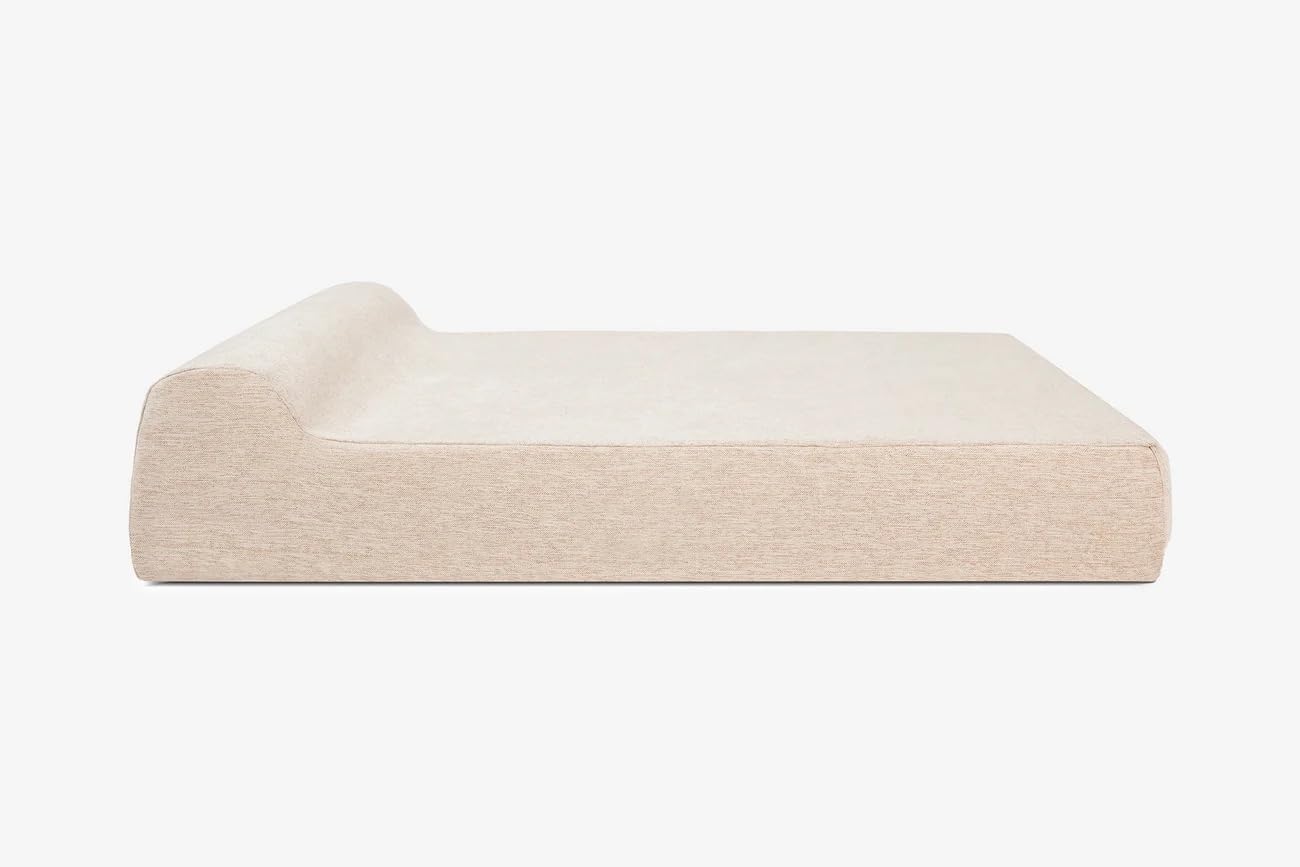
If your senior dog has started sleeping more, moving stiffly in the morning, or choosing the cold tile floor over their padded bed, there’s a good chance their sleeping surface is part of the problem — not the solution. An orthopedic dog bed is one that uses high-density foam (foam rated by firmness using a measure called ILD, or Indentation Load Deflection — the higher the ILD number, the firmer the foam) rather than polyfill, shredded foam scraps, or cheap memory foam that collapses within months. The difference matters because dogs with arthritis, hip dysplasia, or post-surgical joint sensitivity need a surface that distributes their body weight evenly and holds its shape night after night. This guide cuts through the marketing to tell you what foam grades actually hold up, which bed geometries serve recovering dogs differently than they serve arthritic seniors, and how to match the product to the dog in front of you — not the generic size chart on the box.
| EDITOR'S PICKBarker Beds Giant Orthopedic Do… | Mid-tierBedsure ComfyFleece™ Orthopedic… | Budget pickEHEYCIGA Orthopedic Dog Beds fo… | |
|---|---|---|---|
| Thickness | 7" | — | — |
| Dimensions | 60" x 48" | — | 44" x 32" |
| Weight range | 100–300 lbs | — | — |
| Waterproof | — | ✓ | ✓ |
| Foam type | Memory foam | Egg-crate foam | Egg-crate foam |
| Price | $399.95 | $42.99 | $39.99 |
| See on Amazon → | See on Amazon → | See on Amazon → |
Why “Padded” Is Not the Same as “Supportive”
The single most common thing owners report after switching to a true orthopedic bed is some version of: I wish I’d done this sooner. That regret has a structural cause.
Most budget and mid-range dog beds are filled with polyester fiberfill or low-density shredded foam — materials that feel soft at first press but compress flat under repeated use. Per PetMD’s overview of orthopedic dog beds, the key variable isn’t thickness but foam density: a 4-inch bed of high-density foam outperforms a 7-inch bed of polyfill for pressure-point relief, because only a material with enough structural integrity can keep a 70-pound dog’s hip from bottoming out onto the floor.
What makes this relevant to senior dogs specifically: VCA Hospitals’ clinical overview of arthritis in dogs notes that osteoarthritis (the gradual breakdown of cartilage in joints) affects an estimated one in five adult dogs, with incidence rising steeply after age seven. The pressure of lying on a surface that doesn’t distribute weight evenly isn’t just uncomfortable — it can cause dogs to shift their sleeping position repeatedly, disrupting rest and placing asymmetrical load on already-inflamed joints.
The pattern that shows up across long-run owner reviews confirms this. One Big Barker owner who purchased in April 2016 reports — entirely unprompted, seven years and three dogs later — that the bed has not flattened. That’s not a marketing claim; it’s an owner accounting for cost across multiple animals. Another reviewer in the same product thread describes spending months researching before committing to the price. That deliberation-then-conviction arc is one of the most reliable signals in consumer review data that a product is genuinely delivering on a functional promise rather than a novelty one.
Foam Grades, Bolster Heights, and the Geometry That Actually Matters
High-Density Flat Beds: The Workhorse for Larger Breeds
For large and giant breeds — Labs, Goldens, German Shepherds, Great Danes — a flat high-density foam platform with a bolstered perimeter is typically the correct geometry. The flat sleeping surface keeps the spine neutral, the bolster gives the dog something to rest their chin or lean a shoulder against without requiring them to climb over a raised edge.
The Chez Paw bed earns notice here for exactly this reason. A Great Dane owner reviewing the product specifically calls out that the bolstered sides provided comfort without dominating the room aesthetically — a real concern for owners in smaller homes or open-plan spaces where a dog bed the size of a twin mattress needs to not look like a small country. That’s not a trivial point: if the bed is visually overwhelming, it migrates to a corner, the dog stops using it, and you’ve spent $200 on a dog bed that’s now a laundry shelf.
Slant Beds: Underrated for Positional Stiffness
A slant bed — a wedge-shaped platform with one raised end — addresses a different problem than the flat orthopedic does. For dogs who struggle to rise from fully flat positions, the incline gives them a mechanical assist: they can leverage the slope to shift their weight forward and push up rather than having to recruit full hip-extension strength from a dead stop.
Owners of the FURTIME slant bed describe this precisely. One review from the owner of a 15-year-old arthritic Staffordshire Terrier specifically notes that the dog can change positions without sinking or becoming off-balance — which is clinically meaningful language. Position-changing during sleep is how dogs relieve pressure on one joint by shifting load to another. A foam that allows sinking compromises that ability; one that holds the dog in place lets them self-regulate through the night.
Memory Foam vs. High-Density Polyurethane: The Real Tradeoff
Memory foam (viscoelastic foam that conforms slowly to body heat and pressure) is often marketed as the premium choice, and it does excel at contouring. But for heavy dogs or dogs who are highly mobile during sleep, slow-response memory foam can create a “stuck” feeling — the foam takes time to rebound, meaning the dog may have to push against it when rising.
High-density polyurethane (the foam type used in Big Barker and similar clinical-grade beds) responds faster and maintains its loft more consistently over years of use. The tradeoff: it doesn’t contour as closely as memory foam, which matters more for dogs with severe pressure sores or post-surgical wound sites than for standard arthritis management.
By the Numbers
| Foam Type | Typical ILD Range | Best For | Longevity Signal |
|---|---|---|---|
| High-density polyurethane | 30–50 ILD | Heavy breeds, daily long-term use | Owners report 5–7+ year loft retention |
| Viscoelastic memory foam | 10–20 ILD | Contouring, pressure sores | Tends to compress within 2–3 years under heavy use |
| Shredded foam / polyfill | Unmeasured | Short-term budget use | Flat within 6–18 months under regular use |
The Mid-Range Case: What You Get Between $60 and $150
Not every dog owner needs to spend $300 on a dog bed. The EHEYCIGA bed lands in the accessible middle tier and earns specific praise from the owner of a nine-year-old Pittie who reports the dog took to it immediately — despite the owner’s initial skepticism that her dog would bother. This aligns with something the Whole Dog Journal’s guide to dog bed selection notes: dogs with joint pain will self-select supportive surfaces when given genuine access to them. You don’t always need to train or lure a senior dog onto an orthopedic bed; sometimes they just know.
The Bedsure ComfyFleece deserves a brief honest note: one owner expected a corduroy-pile texture based on the product photography and received soft fleece instead. This is a genuine expectation mismatch — not a defect, but a cover-material communication failure that matters if your dog is sensitive to surface texture or if you have tactile preferences for cleanup. Fleece covers trap less debris than corduroy but can pill with repeated washing. Know what you’re buying before the box arrives.
Recovering Dogs: Different Rules Than Senior Dogs
A dog recovering from CCL (cranial cruciate ligament) surgery — the canine equivalent of an ACL repair — has needs that differ from a dog managing chronic arthritis. Per AKC’s overview of post-surgical recovery in dogs, the primary goal in the first 8–12 weeks post-op is controlled, restricted movement. That means:
- No deep bolsters that require the dog to step over or around them during the restricted-mobility phase. A low-profile bolster (2–3 inches) or a flat platform is safer than a fully bolstered nest.
- Waterproof liner underneath the cover is non-negotiable during recovery, because post-surgical drainage and incontinence are common. Most premium orthopedic beds sell proprietary waterproof liners — but a universal waterproof mattress protector cut to size will work inside any bed where the foam core is accessible. The brand’s own liner isn’t always necessary; what matters is that the liner doesn’t shift inside the cover during use.
- Firm support over conforming softness. A dog in an e-collar and reduced mobility needs to push up from the surface cleanly. High-ILD foam wins here over memory foam for exactly the same reason as with positional stiffness in seniors.
Frequently Asked Questions
How do I know when my senior dog actually needs an orthopedic bed versus a regular padded one?
Watch for morning stiffness that resolves after 10–15 minutes of movement, reluctance to lie on hard floors, circling repeatedly before settling, or choosing cool tile over their current bed. Per VCA Hospitals’ arthritis overview, these are early behavioral signs of joint pain. If you see two or more, the bed is worth upgrading now rather than waiting for a diagnosis.
Does foam really not compress over years of daily use, or do reviewers just not notice?
High-density polyurethane foam (ILD 30+) does genuinely resist compression far better than shredded foam or low-density memory foam. The multi-year owner reports from Big Barker — including one spanning seven years and multiple dogs — are not outliers; they’re consistent with what foam engineers publish about high-ILD formulations. Cheaper foams compress because they have lower cell-wall density; the cells collapse under load. Higher-density foam has more structural material per cubic inch and resists that collapse.
What bolster height is safe for a dog recovering from CCL surgery?
During the first 8 weeks post-op, keep bolsters at 2–3 inches maximum, or use a flat platform entirely. After the 8-week recheck and with veterinary clearance for increased activity, a standard 4–6 inch bolster is typically fine. When in doubt, ask your rehab vet — canine rehabilitation practitioners (credentialed through the Canine Rehabilitation Institute or the University of Tennessee’s CCRP program) will often specify bed geometry as part of the recovery protocol.
Can I use a waterproof liner inside any bed cover, or does it have to be the brand’s own liner?
A universal waterproof liner — the kind sold for human mattresses — works inside most removable-cover dog beds as long as it’s sized to fit the foam core without bunching. The brand’s proprietary liner is engineered to fit precisely and often uses a more durable material than budget mattress protectors, but it is not technically required. If you go third-party, prioritize a liner with a secure wrap (not just a flat pad) so it doesn’t shift.
How do I clean a memory foam bed if the cover is not removable?
Spot-clean with an enzyme-based cleaner and blot (never saturate) the foam. Allow full air-drying before use — memory foam holds moisture internally and can develop mold if reassembled damp. If the cover is removable but the liner is stitched in, hand-wash the liner section separately. Beds with non-removable covers are a poor choice for dogs with incontinence or recovery drainage; prioritize fully removable, machine-washable covers if hygiene is a factor.
Will a dog with arthritis actually choose an orthopedic bed over the couch on their own?
Often, yes — once the bed is accessible and positioned where the dog already wants to rest. The nine-year-old Pittie owner who reported immediate adoption despite initial skepticism is representative of a broader pattern: dogs with joint pain are already making low-grade decisions about surface firmness every time they lie down. A genuinely supportive surface frequently wins without any training effort. The couch wins when the dog bed is in the wrong room or has an unappealing surface texture.
The Decision Rule
If your dog is over seven years old with documented or suspected joint issues, or recovering from orthopedic surgery: don’t buy another polyfill bed. The cost-per-year math on a $250–$300 high-density foam bed that lasts seven years is roughly $35–$43 per year — less than most monthly grooming appointments. The regret pattern in long-run reviews isn’t about the price. It’s about the years before the switch.
If your dog is under 50 lbs with moderate stiffness: the EHEYCIGA mid-tier and the Bedsure ComfyFleece (with the surface-texture caveat noted above) are legitimate entry points. If your dog is over 50 lbs, or you have a giant breed: go straight to the Big Barker tier. The longevity data justifies it. If your dog is recovering from CCL repair: flat platform, low or no bolster, waterproof liner, high-ILD foam. Check with your rehab vet before adding bolsters post-surgery.
The owners who waited consistently report the same thing: they didn’t know what their dog was missing until they saw them actually sleep through the night.