August 28, 2026 • Marisol Vane • 11 min reading time • Prices verified June 4, 2026
Bone Broth, Dinner Dust, and Gravy Drizzlers: Which Dog Food Toppers Are Worth the Shelf Space
Bone Broth, Dinner Dust, and Gravy Drizzlers: Which Dog Food Toppers Are Worth the Shelf Space
Dog food toppers are exactly what they sound like: something you add on top of your dog’s regular meal to make it more appealing, more nutritious, or both. The category spans everything from a poured-on liquid (bone broth, gravy) to a shaken-on powder (sometimes called “dinner dust” or a meal topper) to crumbled freeze-dried proteins. If your dog has started leaving food in the bowl, if you’re managing a post-illness appetite slump, or if you’re a trainer who needs a no-mess reward that doubles as a mealtime motivator, the right topper format can genuinely change your daily routine. The wrong one just clutters the shelf. This article breaks down the three main formats — broth, dust, and gravy — by how they work, who they’re actually for, and where the tradeoffs land at each price point.
| EDITOR'S PICKStella & Chewy's Freeze-Dried R… | Mid-tierStella & Chewy's Freeze-Dried R… | Budget pickStella & Chewy's Freeze-Dried R… | |
|---|---|---|---|
| Protein | Bacon | Grass-Fed Beef | Cage-Free Chicken |
| Meat Content | — | 95% | 95% |
| Grain-Free | — | ✓ | ✓ |
| Organs & Bone | — | ✓ | ✓ |
| Weight | 7 oz | 3.5 oz | 3.5 oz |
| Organic Produce | ✓ | — | — |
| Price | $22.38 | $9.97 | $7.98 |
| See on Amazon → | See on Amazon → | See on Amazon → |
Format Matters More Than Brand: The Core Decision Frame
The single most important insight from aggregated buyer reviews across this product cluster is that format drives outcome, not brand loyalty. A dog who won’t eat isn’t solved by “a better topper” in the abstract — it’s solved by matching the sensory trigger (scent, texture, moisture) to what’s actually blocking appetite.
Here’s the practical split across the three dominant formats, each addressed in its own section below.
The Three Formats, Head to Head
Bone Broth: Moisture, Aroma, and the Scent-First Eater
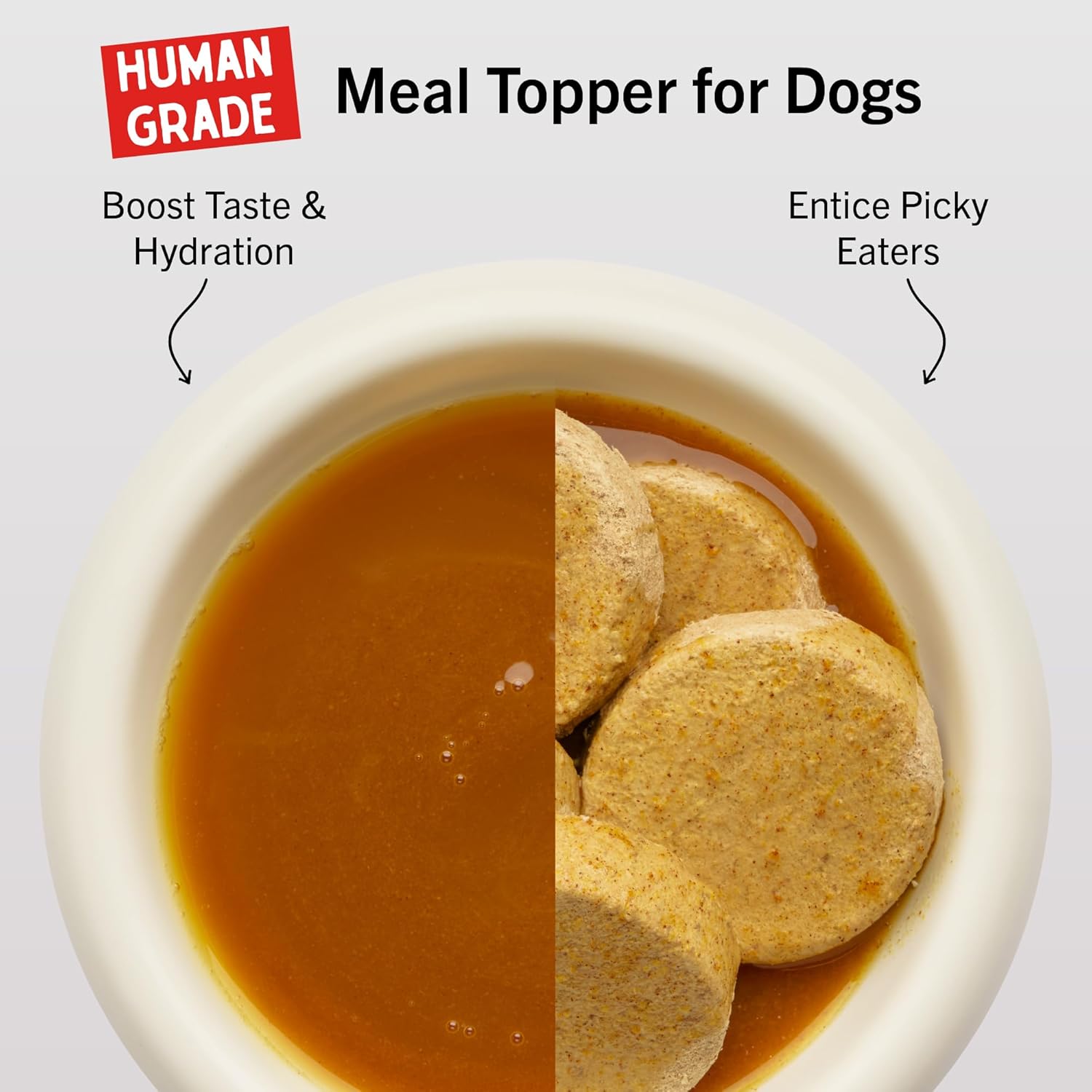
Bone broth works primarily through aroma and moisture. It is a liquid collagen stock — made by simmering animal bones until the connective tissue breaks down into gelatin — that pours over kibble and softens it slightly while releasing a strong meat scent. The American Kennel Club’s editorial piece “Is Bone Broth Good for Dogs?” notes that the appeal is largely olfactory: dogs are scent-first eaters, and warm or room-temperature broth creates a scent plume that cold kibble does not. PetMD’s “Bone Broth for Dogs: Benefits and How to Use It” (updated 2025) specifically highlights bone broth’s role in post-illness appetite support and notes that the moisture content can help dogs whose water intake is depressed during recovery.
Stella & Chewy’s bone broth is the most-reviewed product in this subcategory. One use case that appears repeatedly in owner reports — freezing it into a lick mat or silicone mold — is one the product doesn’t advertise but performs exceptionally well for. If your dog manages separation anxiety or needs slow-consumption enrichment during crate training, a frozen broth block is a legitimate tool. Look for products where the liquid thickens when refrigerated; that gelatin signal indicates meaningful collagen content and better freeze performance.
Best for: Post-illness recovery, hydration support, enrichment applications (frozen lick mats), daily appetite stimulation for scent-driven dogs.
Cost range: Approximately $0.40–$0.90 per serving for a standard 2–4 oz pour over kibble. Open cartons keep seven to ten days refrigerated — VCA Hospitals’ client education resource “Feeding the Finicky Dog” (2024) aligns with this standard manufacturer guidance for liquid protein products. For small-dog households where a carton outlasts that window, freeze half the carton at opening.
Stella
$7.98
In stock on Amazon
Check price on AmazonFreeze-Dried Dust and Powder Toppers: Concentrated Palatability, Maximum Convenience
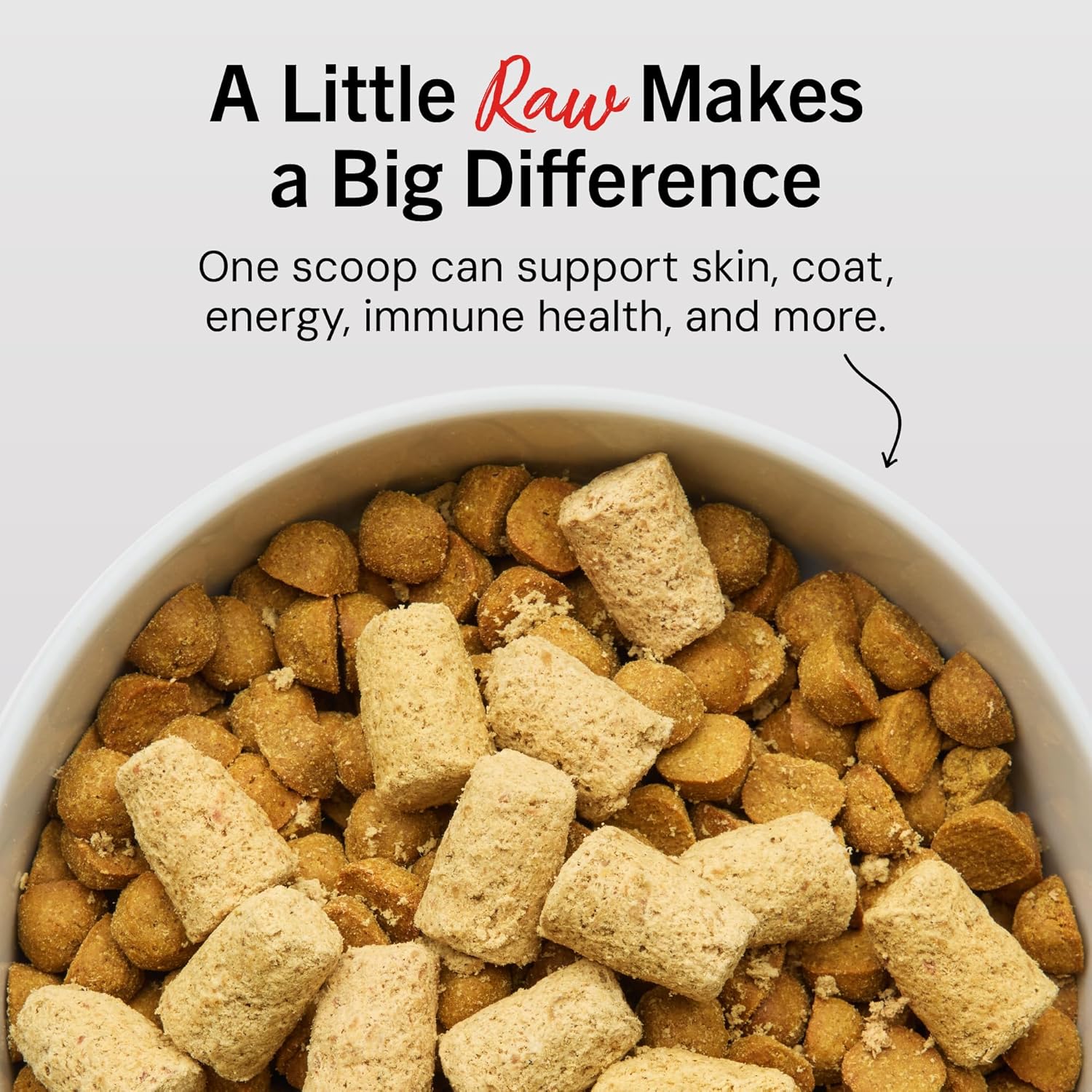
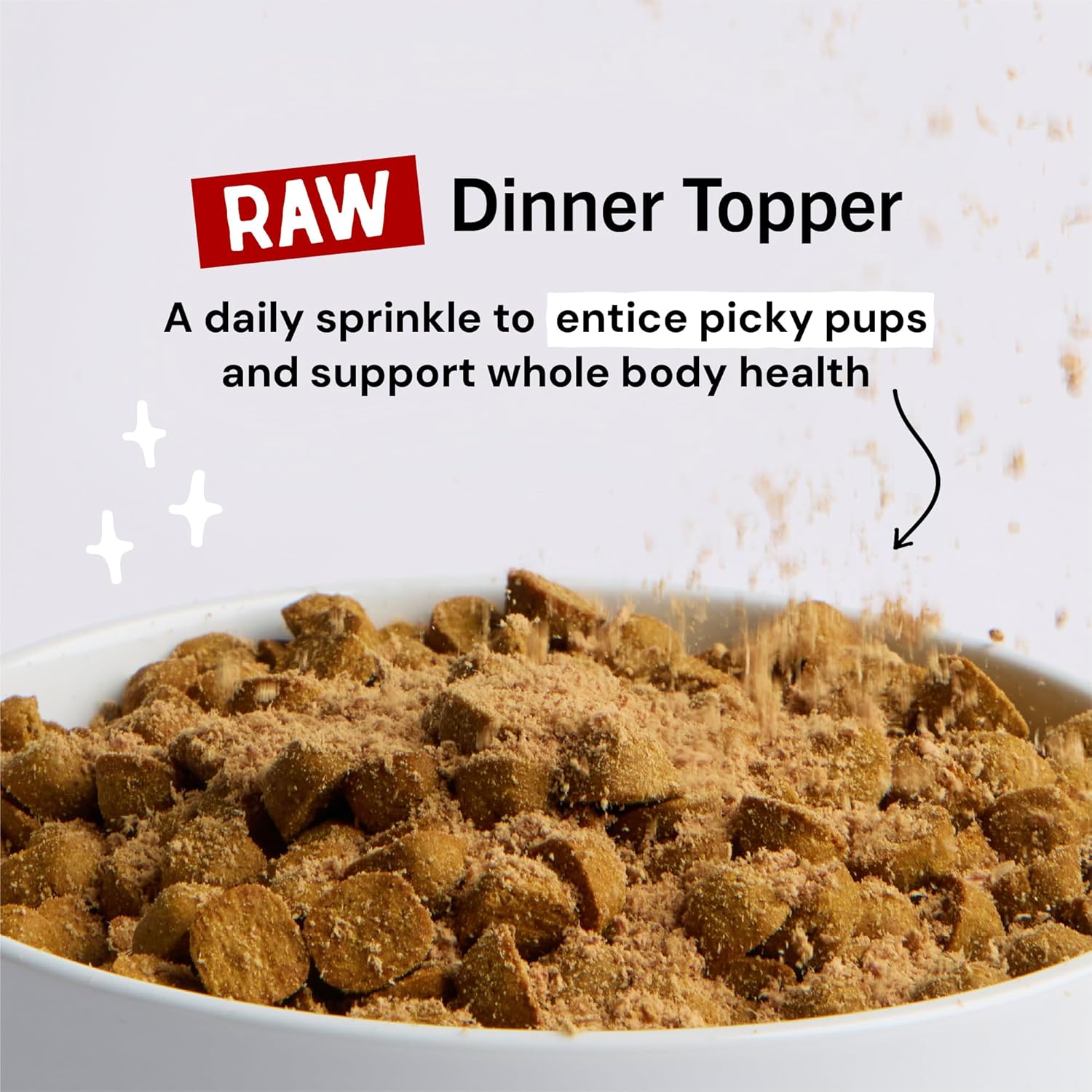
Freeze-drying removes moisture at low temperature, which concentrates protein, fat, and flavor compounds without heat degradation. The result is a powder or fine crumble that shakes directly over kibble and coats each piece rather than pooling at the bottom of the bowl. Stella & Chewy’s Dinner Dust is the category anchor here; reviewer accounts consistently name Goldendoodles and other notoriously selective breeds as the turnaround case, with owners reporting that dogs who had been skipping meals resumed eating reliably once the dust was introduced.
One nuance that surfaces repeatedly: the beef and chicken varieties crumble more easily and distribute more evenly than some other flavor options, which matters when you’re trying to coat every piece of kibble rather than just the top layer.
Single-ingredient freeze-dried treats — Stewart beef liver freeze-dried treats are the textbook example — offer a dual-use alternative. They are one ingredient, easy to portion, and crush between fingers into a fine powder for mealtime coating. If your dog is on a daily pill, that crush-to-powder function doubles as a medication-hiding tool. For trainers, the same treat used as a training marker can be crushed over the bowl at mealtime; the dog’s scent association with the high-value training reward transfers to the meal.
The Whole Dog Journal’s “The Truth About Toppers” (October 2024 issue) flags a meaningful ingredient transparency issue in this format: some products lead with impressive marketing language but list hydrolyzed proteins, natural flavors, and sugar derivatives high in the ingredient panel. Single-ingredient products sidestep this entirely. For dogs with known food sensitivities or IBD, the Tufts University Cummings Veterinary Medical Center’s “Your Dog” newsletter (“When Picky Eating Is a Problem,” 2024) recommends introducing novel proteins one at a time — exactly the argument for single-ingredient toppers over multi-ingredient blends during a dietary investigation.
A sizing caveat worth naming explicitly: multiple reviewers with large breeds — Great Pyrenees being the specific example that surfaces repeatedly in Crumps’ Naturals sprinkle reviews — note that the container runs out faster than expected and the per-serving cost becomes significant at scale. If you are feeding a dog above 70 lbs daily, run the per-serving math before committing to a subscription.
Best for: Daily meal-skippers with no known sensitivities, training households that want one product for two purposes, elimination-diet dogs (single-ingredient format only).
Cost range: Approximately $0.25–$0.60 per serving (roughly 1 tsp per cup of kibble). Sealed shelf life of six to twelve months means no spoilage pressure.
Stella
$9.97
In stock on Amazon
Check price on AmazonGravy Drizzlers: The Palatability Bridge for Hard Transitions
Gravy drizzlers (Pedigree’s product being the highest-volume example in the category) work as a palatability bridge for dogs in appetite crisis — animals that have been eating primarily human food and are refusing commercial diets, or dogs recovering from disruption who need a strong sensory cue to restart eating. The Whole Dog Journal’s 2024 topper analysis describes this segment plainly: it is a functional, affordable tool that makes no premium nutritional claims and does not need to.
Across gravy drizzler reviews, the pattern is consistent — this is a desperation product that works. Dogs that refused everything else ate when the gravy was added. That is not a knock; it is the job description. The flavor profile and moisture level are closest to what a human-food-accustomed dog expects, and the palatability signal is strong enough to bridge the gap. Single-use pouches eliminate the storage and spoilage management that carton-based liquids require, which matters in households where topper use is situational rather than daily.
The recommended transition protocol: once the dog is eating reliably with the gravy, reduce the drizzle by approximately 25 percent each week while keeping the base food constant. Most dogs complete the transition in three to four weeks. VCA Hospitals’ “Feeding the Finicky Dog” resource supports this graduated approach for dogs being transitioned off highly palatable foods.
AAFCO — the Association of American Feed Control Officials, the body that sets ingredient-definition standards for U.S. pet food — does not maintain a separate regulatory tier for toppers. That means a gravy product marketed as a “meal enhancer” can use the same label conventions as a complete-and-balanced food, or nearly none at all. Reading the ingredient panel on gravy products is not optional if you care about what you’re adding.
Best for: Human-food-to-commercial-food transitions, short-term appetite crisis, households needing single-use convenience with no refrigeration management.
Cost range: Approximately $0.50–$0.80 per pouch (single-use, one pouch per meal). No shelf-life management required.
Stella
$22.38
In stock on Amazon
Check price on AmazonBy the Numbers
| Format | Typical serving size | Approx. cost per serving | Shelf life after opening |
|---|---|---|---|
| Bone broth (carton) | 2–4 oz poured over kibble | $0.40–$0.90 | 7–10 days refrigerated |
| Freeze-dried dust/powder | 1 tsp per cup of kibble | $0.25–$0.60 | 6–12 months (sealed) |
| Gravy drizzler (pouch) | 1 pouch per meal | $0.50–$0.80 | Single use, no storage issue |
| Freeze-dried treat sprinkles | 1 small handful | $0.30–$0.70 | 12+ months (sealed) |
Cost estimates based on standard retail pricing as of mid-2026. Serving costs shift significantly at larger breed volumes.
How to Choose: The Decision Rules
The practitioner-level question here is not “which topper is best” — it is “which format solves the specific problem in front of me.”
If the dog is a healthy adult with declining kibble interest: Start with freeze-dried dinner dust. It is the lowest-friction format — no refrigeration, no measuring beyond a rough shake, no spoilage risk. Stella & Chewy’s Dinner Dust is the most documented product in this category for meal-skipping behavior reversal, and the serving cost is low enough that daily use is sustainable for most breeds.
If the dog is recovering from illness, stress, or a major diet transition: Bone broth first. The moisture addition supports hydration at a moment when water intake is often depressed, and the aroma stimulus is strong without being texturally foreign. Warm it slightly — not hot — before pouring; the temperature accelerates scent release.
If the dog has been eating primarily human food and is refusing commercial diets: Pedigree’s gravy drizzler is the empirically supported bridge here. Use it as a two-to-four week transition tool while gradually reducing the drizzle proportion.
If you are a trainer who needs a topper that doubles as a high-value treat: Stewart beef liver freeze-dried treats, crushed. Single ingredient, easy to portion, and the powder function handles both meal coating and medication hiding without switching products between sessions.
If you are managing a dog with known food sensitivities: Single-ingredient, novel-protein toppers only. Do not introduce a multi-ingredient blend during a dietary investigation. The Tufts University Cummings Veterinary Medical Center guidance on picky eating and novel-protein introductions is clear on this point: every additional ingredient in the topper is a variable you cannot control while the elimination protocol is active.
Frequently Asked Questions
Can I freeze bone broth in a lick mat or silicone mold?
Yes — and this is one of the more genuinely useful applications in the category. Stella & Chewy’s bone broth freezes cleanly into silicone molds and standard lick mats. Owners managing separation anxiety or crate training report using frozen broth blocks as slow-consumption enrichment. The gelatin content in a quality bone broth — indicated by the liquid thickening when refrigerated — helps it hold its shape once frozen. Let it thaw for about five minutes at room temperature before serving if your dog is sensitive to cold.
Which topper format works best for a dog who was previously eating only human food?
Gravy drizzlers. Once the dog is eating reliably with the gravy, reduce the drizzle by roughly 25 percent each week while keeping the base food constant. Most dogs complete the transition in three to four weeks.
How do I use freeze-dried toppers as both a meal enhancer and a training treat?
Buy the treat form of the same protein — Stewart beef liver freeze-dried treats are the most versatile for this. Use whole pieces as training markers during sessions. At mealtime, crush the same treats over the bowl. The dog’s scent association with the training treat transfers to the meal. No separate products, no ingredient mismatch.
Are single-ingredient toppers actually better than multi-ingredient blends for sensitive dogs?
For diagnostic purposes, yes — unambiguously. When you are trying to identify a food trigger, every additional ingredient in the topper is a variable you cannot control. Single-ingredient toppers keep the elimination protocol clean. For dogs with no known sensitivities, multi-ingredient blends often have higher palatability scores in owner reviews, so “better” depends entirely on what problem you are solving.
How long does an open carton of bone broth stay good in the fridge?
Seven to ten days is the standard manufacturer guidance, consistent with VCA Hospitals’ “Feeding the Finicky Dog” recommendations for similar liquid protein products. If you notice sourness in the smell or unusual cloudiness beyond normal gelatin turbidity, discard it. For small-dog households where a carton outlasts that window, freeze half the carton in a silicone mold at opening.
The Bottom Line
Toppers are not a replacement for solving the underlying diet problem, and they are not magic — but the right format, matched to the right situation, is a legitimate tool. Freeze-dried dust for the daily meal-skipper. Broth for moisture, recovery, and enrichment. Gravy for the hardest transitions. Single-ingredient formats for sensitive dogs and training versatility. Run the per-serving math for large breeds before committing to any format at subscription volume, and do not let marketing language substitute for reading the ingredient panel. The products that earn shelf space are the ones with a specific job — and they do it.