August 16, 2026 • Marisol Vane • 11 min reading time • Prices verified June 4, 2026
Big Barker vs. Budget Orthopedic Beds: A Long-Term Value Test for Large and Giant Breeds
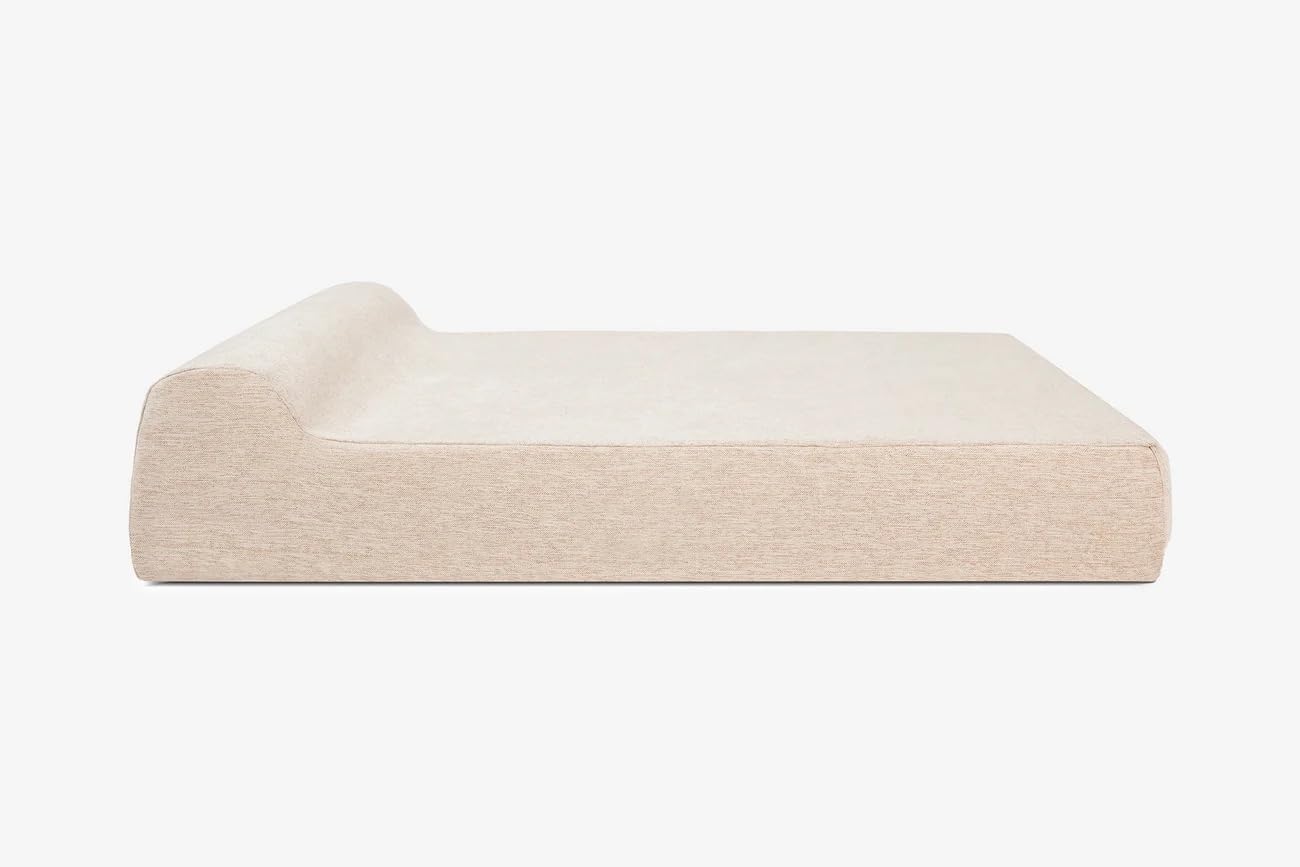
If you’ve ever typed “best orthopedic dog bed for large breeds” into a search bar and felt immediately overwhelmed — you’re not alone. The term orthopedic on a pet product has no regulated definition. Any manufacturer can print it on a box. What actually determines whether a bed will support a 90-pound Labrador’s joints through the night isn’t the label; it’s the foam grade beneath the cover. Foam is rated by ILD (Indentation Load Deflection) — a measure of how much weight it takes to compress the foam by 25 percent. A higher ILD means firmer support. For large and giant breeds, a foam that bottoms out — compressing all the way to the floor and becoming effectively flat — is not only useless, it may accelerate joint stress over time. This article is built around a central question: does spending $200–$300 on a premium bed like Big Barker actually deliver better long-term value than a $50–$80 budget alternative, or is the price gap mostly marketing?
The short answer: for dogs over 70 pounds, the gap is real and the math is defensible. Here’s exactly why, and where the exceptions live.
The Core Spec That Separates Premium from Budget
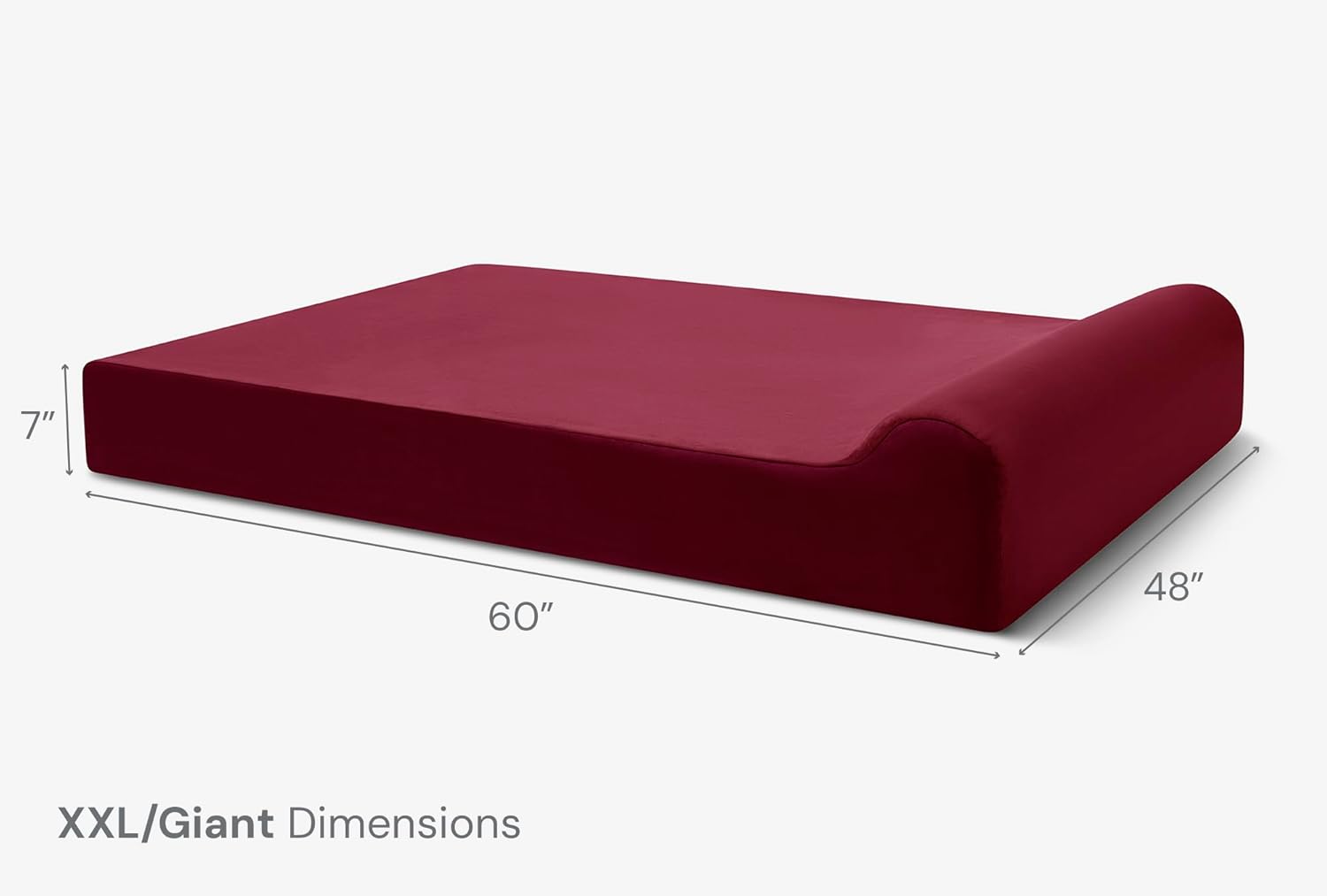
Big Barker’s published specifications are unusually transparent for the pet industry. The bed uses a three-layer American-made foam system: a 4-inch base foam rated at a firm ILD, a 3-inch therapeutic middle layer, and a 3-inch top comfort layer — 10 inches of total foam depth. The company publishes a 10-year guarantee against foam flattening beyond 10 percent of original height, along with the test methodology behind that claim. That level of documentation is rare in the pet bedding category.
Budget orthopedic beds — price-pointed at $40–$90 and sold under dozens of brand names — typically use one of two foam types: egg-crate foam (a convoluted, ridged foam with air channels between peaks) or low-density memory foam. Both have legitimate uses. Egg-crate foam distributes pressure reasonably well for lighter dogs and dogs who sleep in a single position. Memory foam conforms to body shape and can relieve pressure points in arthritic joints. VCA Hospitals, in their clinical overview “Arthritis in Dogs,” notes that pressure relief is a meaningful environmental management factor for arthritic dogs, making surface quality a genuine medical consideration rather than a luxury preference.
The problem with budget options is density and durability. Whole Dog Journal, in their guide “Choosing the Right Dog Bed,” notes that consumer-grade memory foam at lower densities — typically 2–3 lb per cubic foot in budget products versus 4–5 lb per cubic foot in premium versions — compresses permanently under sustained heavy-dog use within 12–18 months. For a 50-pound dog sleeping 12 hours a day, budget foam may last two to three years before meaningful flattening. For a 100-pound Saint Bernard or Great Dane, that compression timeline can shrink to six to nine months.
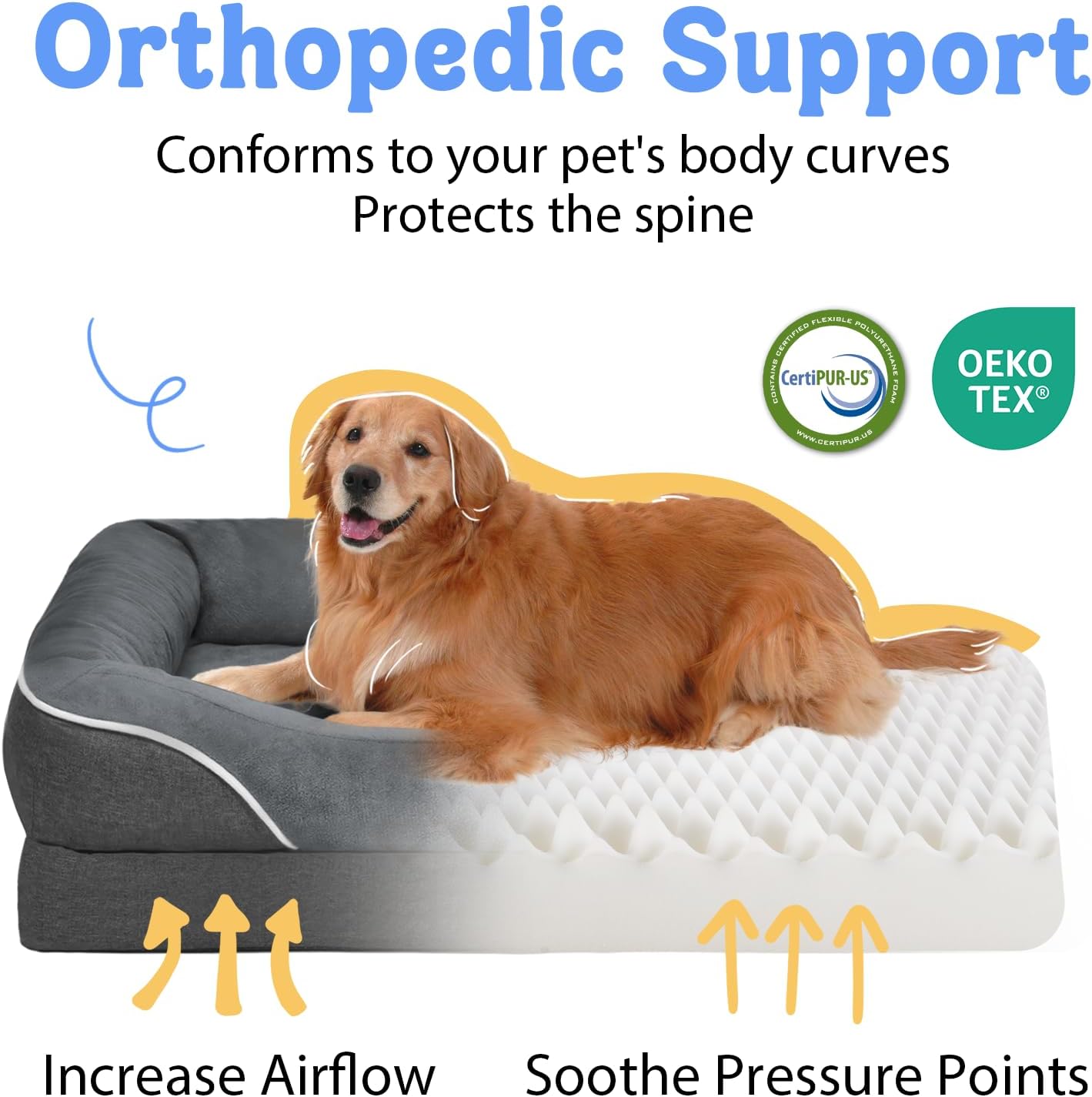
The practical translation: a budget bed at $70, replaced every 12–18 months for a large-breed dog, costs roughly $47–$70 per year. Big Barker, at approximately $290–$320 depending on size and current pricing as of mid-2026, amortized over its documented 7–10-year lifespan, runs approximately $29–$46 per year. The premium bed is cheaper per year of actual orthopedic function — if the foam holds as documented.
Comparing the Three Tiers: Budget, Mid-Range, and Premium
Not every large-breed owner is choosing between a $65 Amazon egg-crate pad and a $300 premium bed. There’s a meaningful mid-range tier — typically $100–$160 — that uses better foam than the budget category but stops short of Big Barker’s documented specs. Understanding what each tier actually delivers helps match the investment to the dog’s age, size, and health status.
Budget Tier: $40–$90 Egg-Crate and Low-Density Memory Foam Beds
Budget orthopedic beds occupy a wide quality band. At their best, they provide adequate pressure distribution for dogs under 60 pounds and for dogs in the active chewing phase where destruction risk is high. At their worst, they involve manufacturing inconsistencies that create real operational problems.
Specific failure modes documented across budget purchases: one buyer ordered two identical units simultaneously and received a second bed containing a solid, deformed rubber mattress rather than the egg-crate foam shown in the product listing — a manufacturing consistency problem with direct implications for anyone purchasing at volume. Another commonly reported issue involves cover-to-foam sizing mismatches: the cover is undersized relative to the foam insert, requiring a specific diagonal-angle insertion technique before the foam seats correctly. This matters every wash cycle. If the assembly process is difficult enough that owners skip cover removal, the foam core goes uncleaned — a genuine hygiene problem for dogs with incontinence or skin conditions.
The AKC, in their guide “Orthopedic Dog Beds: What to Look For,” notes that foam quality is the primary durability variable in dog beds and that cover materials and aesthetic features are secondary considerations. Budget beds often invert this priority in marketing, emphasizing cover softness and appearance while understating foam density.
Stella
$7.98
In stock on Amazon
Check price on AmazonMid-Range Tier: $100–$160 Higher-Density Single-Layer Foam Beds
The mid-range represents a meaningful upgrade in foam density — typically 3–4 lb per cubic foot versus the 1.5–2.5 lb range common in budget options — but generally uses a single-layer construction rather than the multi-layer systems found in premium beds. Single-layer foam at adequate density will outlast budget options for large breeds, often lasting two to four years before significant compression in the 70–90 lb dog range.
Mid-range beds are a defensible choice for dogs in the 50–70 lb range, for multi-bed setups where budget is spread across several sleeping stations, or for owners who want a meaningful foam upgrade without committing to the premium price point. The key specification to verify at this tier: foam density stated in lb per cubic foot, not just foam thickness. A 5-inch bed at 4 lb/ft³ outperforms a 7-inch bed at 2 lb/ft³ for a heavy dog every time.
Cover quality at the mid-range tier also varies more than it should. One commonly reported issue involves product images showing corduroy or canvas covers while delivered units arrive with fleece. This matters functionally: fleece retains heat, and dogs who sleep warm — Bulldogs, thick-coated working breeds, older dogs with circulation changes — may avoid a fleece-covered bed even if the underlying foam is adequate.
Chez
$42.89
In stock on Amazon
Check price on AmazonPremium Tier: $200–$320 Multi-Layer High-Density Foam Beds
Big Barker is the most documented product in this tier and the only one in the pet bed category with multi-year owner verification at scale. Long-term purchase histories documented by owners include at least one verifiable account of a bed purchased in 2016 and confirmed undamaged through 2023 — a seven-year, multi-dog proof of durability on a single foam core. The 95-pound Golden Retriever using that bed in year seven is not a marketing claim; it’s a consumer-documented outcome.
Wirecutter, in their review guide “The Best Dog Beds,” specifically calls out destructive chewing as the primary reason not to invest heavily in a first bed for a young dog — a caveat that applies directly to the premium tier. Big Barker’s warranty does not cover chew damage, and a destroyed foam core is not cheaply replaceable. The premium tier is the right investment once chewing behavior has been stable for at least four to six months.
For arthritic large-breed dogs, the orthopedic case for the premium tier goes beyond financial math. VCA Hospitals’ arthritis overview identifies sustained joint pressure as a contributor to pain and mobility decline, and a foam that bottoms out completely under the dog’s weight eliminates any pressure-relief benefit regardless of what the product label states.
Barker
$399.95
In stock on Amazon
Check price on AmazonBy the Numbers
| Metric | Budget ($40–$90) | Mid-Range ($100–$160) | Premium / Big Barker ($290–$320) |
|---|---|---|---|
| Foam depth | 3–5 inches | 4–6 inches | 10 inches (3-layer) |
| Foam density | 1.5–3 lb/ft³ (est.) | 3–4 lb/ft³ (est.) | 4–5 lb/ft³ (published) |
| Warranty against flattening | Rarely stated | 1–2 years typical | 10 years (published) |
| Est. useful life (70+ lb dog) | 6–18 months | 2–4 years | 7–10 years (owner-documented) |
| Annual cost (amortized) | $47–$70/yr | $40–$55/yr | $29–$46/yr |
Stella
$7.98
In stock on Amazon
Check price on AmazonChez
$42.89
In stock on Amazon
Check price on AmazonBarker
$399.95
In stock on Amazon
Check price on AmazonWhere Budget Beds Actually Make Sense
The case for the premium tier is strong but not universal. There are three situations where the budget tier is the defensible financial and practical choice:
Young dogs with an active chewing habit. Wirecutter’s dog bed guide specifically identifies destructive chewing as the primary reason not to invest heavily in a first bed. If your 18-month-old Malinois or Labrador is still working through the chewing phase, a $65 egg-crate bed that gets destroyed in three months is a better economic outcome than a destroyed $300 bed. Wait until chewing behavior is reliably stable before upgrading.
Senior dogs in the final 12–18 months of life. If your veterinarian has indicated your large-breed dog is entering late-stage decline, the 10-year amortization math does not apply. A quality budget bed with adequate pressure relief — replaced as needed — is entirely appropriate. The goal shifts from long-term structural performance to immediate comfort.
Multi-bed setups where coverage matters more than depth. Trainers and small kennel operators running four to eight crates often need beds in every space simultaneously. A mixed strategy — premium bed in the primary sleeping location, quality budget beds in training crates or vehicle setups — is a reasonable operational compromise.
Frequently Asked Questions
How long should a quality orthopedic dog bed last for a 70–80 lb dog?
A genuinely high-quality orthopedic bed using high-density foam at adequate depth should maintain functional support for five to seven years minimum for a dog in the 70–80 lb range. Budget beds with lower-density foam typically begin to bottom out within 12–24 months under daily use by a dog this size. The AKC, in “Orthopedic Dog Beds: What to Look For,” identifies foam quality as the primary durability variable — not cover material or price alone.
Is egg-crate foam or memory foam better for a dog with arthritis?
For arthritic dogs, memory foam at adequate density is generally preferred because it conforms to body contours and distributes pressure across the entire contact surface rather than concentrating it at joints. VCA Hospitals’ overview “Arthritis in Dogs” notes that pressure relief at joint contact points is a meaningful environmental factor in comfort management. Egg-crate foam reduces pressure better than flat foam but has gaps between peaks where joints can settle unevenly. High-density memory foam is the better choice for an arthritic large-breed dog; egg-crate foam is more appropriate for pressure distribution in dogs without significant joint pathology.
What does a waterproof liner actually protect — the whole bed or just the top layer?
In most orthopedic dog beds, including Big Barker, the waterproof liner wraps the foam core itself rather than the outer cover. This protects the foam from urine, moisture, and microbial saturation — where irreversible odor and structural damage occur. The outer cover is a comfort layer that goes in the washing machine. If your dog has incontinence, the liner is doing the critical work. Confirm that the liner fully encases the foam before purchasing any orthopedic bed marketed for senior or incontinent dogs.
How do I wash a dog bed with a foam insert without ruining the foam?
Remove the foam insert before washing — always. Machine-washing foam causes interior tearing and accelerates delamination even on gentle cycles. The outer cover and removable waterproof liner go in the washing machine on cold, gentle cycle; tumble dry low or air dry. The foam core should be spot-cleaned with a diluted enzyme cleaner (standard detergent does not break down uric acid crystals), then air-dried completely before reinserting. Never put foam in a dryer. If the foam-insertion process is difficult, insert one short end at a 45-degree diagonal angle first, then walk the cover down over the foam — this resolves most fit issues without forcing or tearing cover seams.
The Decision Rule
If your dog is over 70 pounds, past the active chewing phase, and you expect to own them for five or more years: the premium tier is the better long-term financial decision and the better orthopedic decision. The seven-year owner documentation is the strongest real-world durability proof available in this product category, the foam specs are published and specific, and the annual cost math favors the premium bed over any realistic budget replacement cycle.
If your dog is under 50 pounds, still chewing, in late-stage senior decline, or you’re furnishing multiple crates simultaneously: a quality budget or mid-range orthopedic bed is entirely appropriate — with the caveat that you verify foam density matches your dog’s needs and inspect each unit on arrival given the manufacturing consistency issues documented across the budget tier.
The one conclusion every source in this category agrees on: any foam that bottoms out completely provides zero orthopedic benefit. A flat bed is just a flat bed, regardless of what the label says.