May 13, 2026 • Marisol Vane • 11 min reading time • Prices verified June 4, 2026
Step-In vs. Overhead Harnesses for Small Dogs: Ease of Use Is Not the Only Thing That Matters
Step-In vs. Overhead Harnesses for Small Dogs: Ease of Use Is Not the Only Thing That Matters
If you’ve ever tried to wrestle a wriggling Chihuahua into a harness at 2 a.m. for an emergency potty run, you already know why the step-in harness category exists. A step-in harness is exactly what it sounds like: you lay it flat, your dog steps both front feet into two loops, and you clip it closed at the back — no lifting or threading over the head required. An overhead harness (sometimes called a slip-over or vest harness) goes on the way a human would put on a shirt, with the dog’s head going through a neck loop first. Both styles distribute leash pressure across the chest and shoulders instead of the throat — a significant advantage over collars alone — but beyond that shared benefit, they behave very differently depending on your dog’s body shape, medical history, and daily routine.
This article walks through the real decision factors: security, tracheal health, breed geometry, motion context, and the specific escape-artist problem that plagues a disproportionate share of small-dog owners. You’ll find the harness landscape broken into three tiers — budget, mid-range, and premium — so you can match a recommendation to your situation. By the end, you’ll have a clear decision framework, not just a list.
Why “Easy to Put On” Is a Legitimate Safety Criterion — But Not the Whole Story
Let’s take the convenience argument seriously first, because the small-dog owner community takes it seriously. A dog that won’t stay still while you fumble with an overhead loop is a dog that could bolt before you get the harness secured. In that framing, the step-in isn’t just convenient; it’s a tool that reduces the window of unsecured exposure during the harnessing process itself.
That said, convenience is the entry argument, not the deciding one. The Whole Dog Journal, in its harness selection guide “How to Choose a Dog Harness,” notes that fit consistency matters more than entry method for long-term security — a harness that goes on easily but rides out of position during a walk isn’t protecting your dog’s structure or keeping them contained. The question to ask isn’t “which style is faster to put on?” but “which style stays correctly positioned on this dog’s body throughout the activity?”
The Tracheal Collapse Variable: When Vet Guidance Shapes the Purchase
This is the use case where the stakes are highest. Tracheal collapse is a condition common in toy and small breeds — Yorkies, Pomeranians, Chihuahuas, Poodles — in which the cartilage rings supporting the trachea weaken, causing the airway to flatten under pressure. The result is the honking cough many small-dog owners recognize. Any pressure on the throat aggravates it.
VCA Hospitals, in their clinical document “Tracheal Collapse in Dogs,” identifies harnesses as the standard veterinary recommendation over collars for affected dogs, specifically because harnesses move leash pressure to the sternum and chest rather than the neck. VCA Hospitals also notes that tracheal collapse affects a significant proportion of toy-breed dogs, with Yorkshire Terriers, Pomeranians, Pugs, and Chihuahuas among the most commonly cited breeds.
What clinical guidance doesn’t always specify is which harness style. Overhead vest-style harnesses designed with a chest band that sits well below the tracheal area — the Puppia Soft is a frequently cited example in owner communities — are the configuration that veterinary rehabilitation practitioners tend to prefer for this diagnosis, because the wide chest panel positions contact away from the tracheal base during normal walking.
The tradeoff: Overhead harnesses require threading the dog’s head through a loop, which can be stressful for dogs with respiratory sensitivity if the motion triggers coughing. Some owners of trachea-compromised dogs find that a well-fitted step-in that bypasses the head entirely is easier on the dog during harnessing — even if the vest-style offers superior at-rest positioning. Discuss both options with your veterinarian if your dog has a confirmed diagnosis.
Breed Geometry: Why Your Pomeranian Isn’t Just a “Small Dog”
The American Kennel Club, in their guidance document “Harness vs. Collar: What’s Best for Your Dog?,” makes the general case for matching harness geometry to dog build — but the degree to which small-breed body shapes vary within the same size tier deserves closer attention.
One of the most practically useful owner-reported warnings in this category involves Pomeranians and front-clip harnesses. The front-clip no-pull mechanism works by attaching the leash to a ring on the chest strap, redirecting a pulling dog back toward their owner. This depends entirely on the chest strap staying centered on the sternum. Pomeranians’ double coat and barrel-shaped chest geometry prevent this: the ring migrates laterally during movement, so instead of redirecting the dog toward you when they pull, it creates asymmetric lateral torque on the shoulder. The no-pull function fails, and the dog may experience uneven pressure on the joint.
This is a breed-geometry mismatch, not a product defect. Front-clip harnesses work well on flat-coated, deeper-chested small breeds. Pomeranians, Shih Tzus, and similarly coated or heavily boned toy breeds generally need an overhead vest harness where the chest panel is wide enough to stay in position regardless of coat volume.
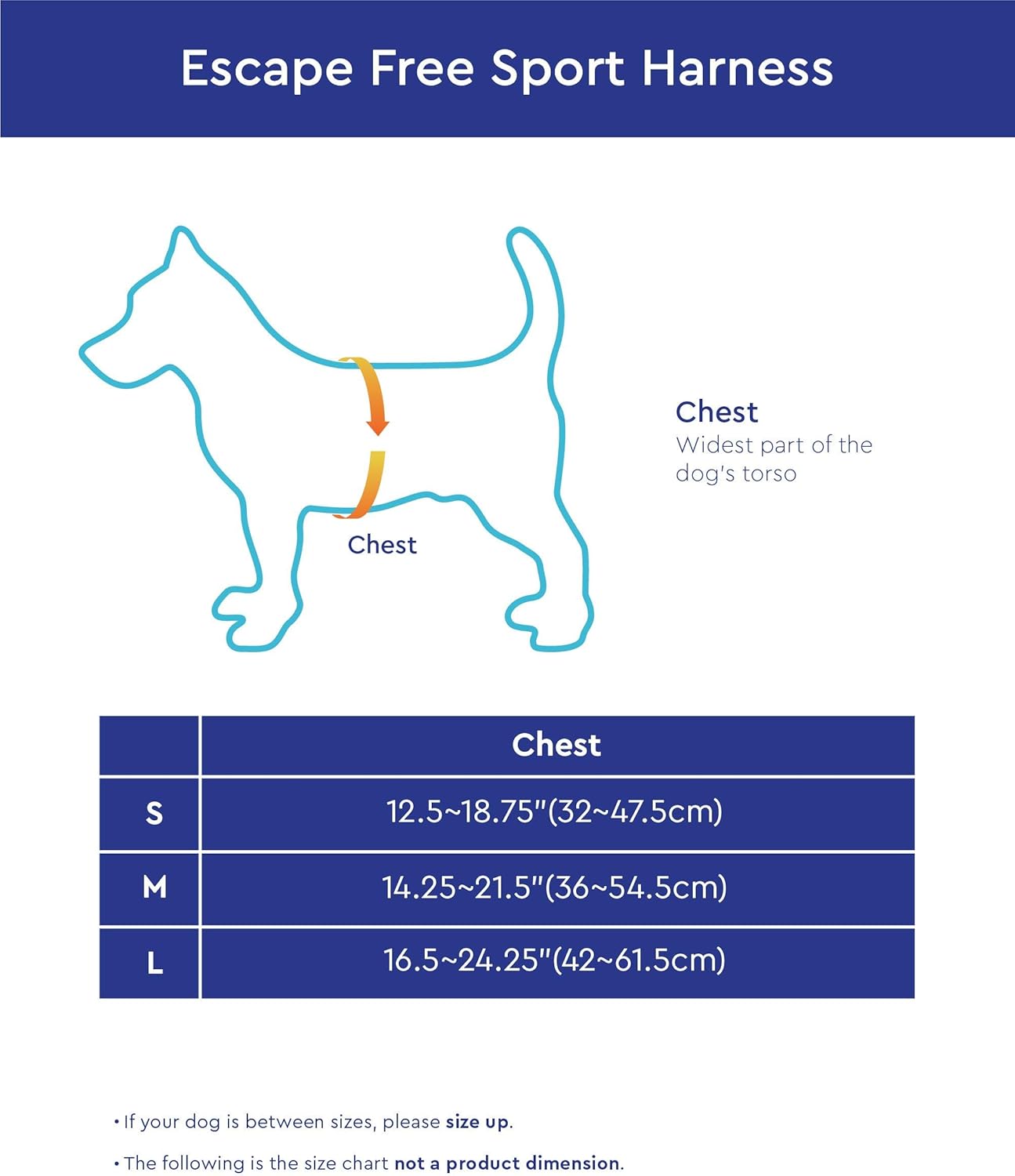
The decision rule: If your dog has a double coat or a chest circumference that’s disproportionately large relative to their neck, default to an overhead vest harness with a wide, padded chest panel. Measure chest girth before you order — a dog listed as “small” by weight may size into “medium” by chest measurement.
Harness Comparison by Tier
The following three sections break down the step-in vs. overhead decision across budget, mid-range, and premium price points. Each tier surfaces a different primary use case and a different set of tradeoffs.
Budget Tier: Step-In for Fast Harnessing and Mild Escape Risk
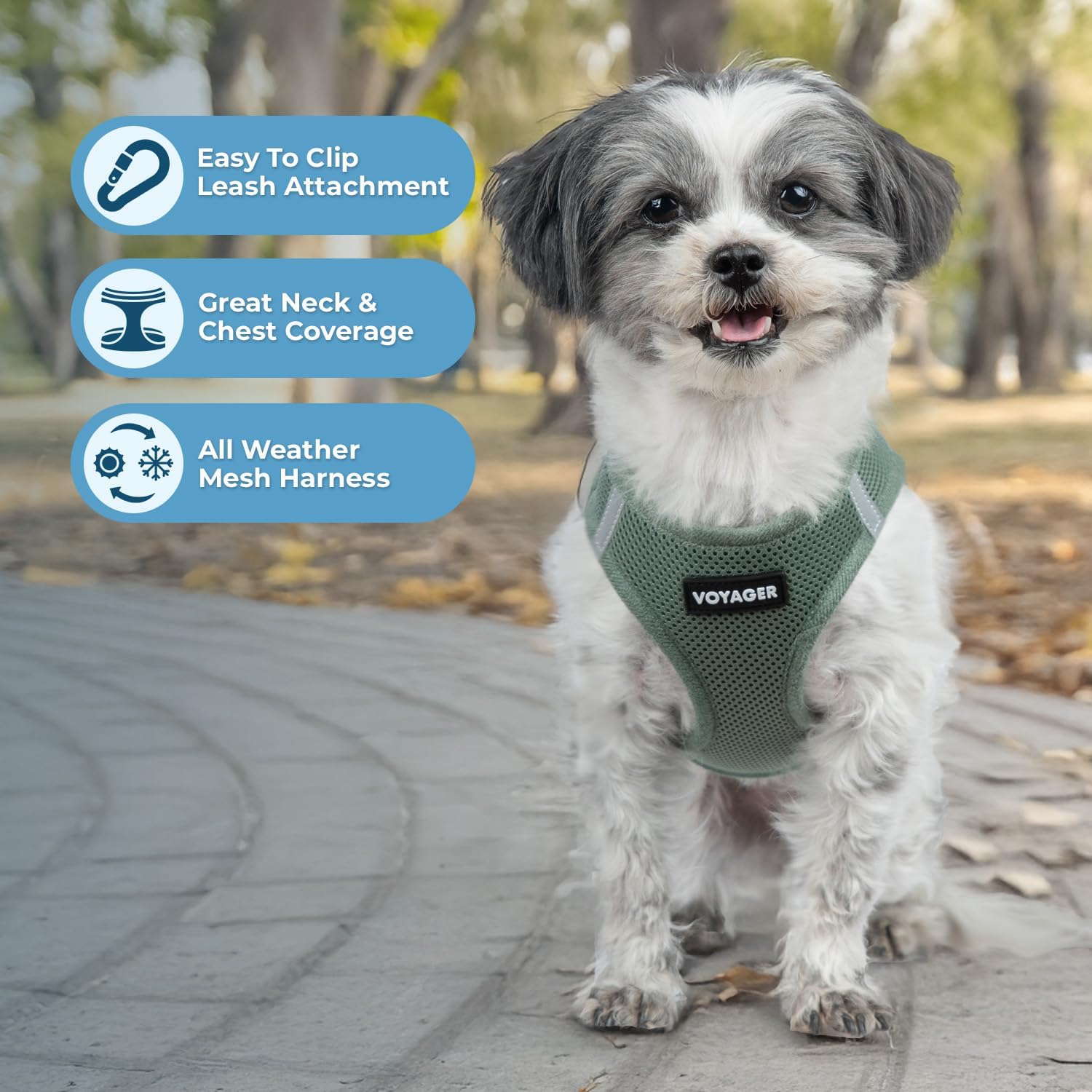
The Voyager Step-In Air Mesh harness is the most widely reviewed budget step-in for small dogs. Its defining feature is a dual-closure system — hook-and-loop (Velcro) plus a buckle clip — meaning the dog would need to defeat two independent closure mechanisms simultaneously to escape. Reviewers with documented escape artists consistently describe this combination as the configuration that finally worked after single-clip alternatives failed.
At this price point, the tradeoff is chest-panel width: the Voyager’s mesh panel is thinner and less structured than mid-range vest harnesses, which means it can migrate toward the throat on dogs with heavy pulling habits. For light walkers, casual potty runs, and low-reactivity dogs, it performs well. For dogs who lunge or have tracheal sensitivity, size up to the next tier.
PetMD’s overview “Best Dog Harnesses for Small Dogs” notes that escape risk is highest during fear events — fireworks, traffic, unfamiliar environments — precisely when a dog is most likely to apply sustained backward or lateral force. If your dog is reactive, treat the budget tier as a starting point rather than a final answer.

Crumps'
$8.99
In stock on Amazon
Check price on AmazonMid-Tier: Martingale Loop Design for the Escape-Artist Specialist
The Gooby Sporty Escape Free harness occupies the mid-range and specifically engineers for the backward-shimmy escape — the move where a dog plants their feet and reverses direction, compressing the chest loop until it slips forward over the shoulders. The Gooby adds a secondary martingale-style loop (named after the equestrian martingale collar concept) that tightens proportionally when the dog backs up or twists, then releases when forward motion resumes.
Owners of dachshunds, Italian Greyhounds, and other low-withers breeds report the highest satisfaction with this feature. Reviewers with tracheal-collapse diagnoses also appear frequently in this product’s review base — the design keeps contact on the sternum rather than migrating toward the throat, and the absence of head-threading during harnessing is noted as a benefit for sensitive dogs.
The Whole Dog Journal’s harness guidance emphasizes that no anti-escape mechanism substitutes for correct fit: the harness should allow two fingers between webbing and skin at every contact point, but no more. The martingale loop adds a dynamic fit correction, but it cannot compensate for a harness that is fundamentally too large at rest.

Outward
$15.25
In stock on Amazon
Check price on AmazonPremium Tier: Overhead Vest for Medical Cases, Barrel-Chested Breeds, and Car Travel
The Puppia Soft harness and, for more active or larger small breeds, the Ruffwear Front Range in its smaller sizes represent the premium overhead vest category. Both use a wide, padded chest panel that wraps the thorax rather than contacting it at two points, which produces three distinct benefits for the use cases described in this article.
First, for tracheal-collapse dogs, the broad panel positions contact clearly below the tracheal base during both stationary wear and walking — the configuration VCA Hospitals’ clinical guidance implicitly supports when recommending harnesses over collars for affected breeds.
Second, for barrel-chested and double-coated breeds (Pomeranians, Shih Tzus, Maltese), the self-positioning chest panel stays in place regardless of coat volume, resolving the front-ring migration problem that affects step-ins and front-clip designs on these body types.
Third, owner-reported patterns suggest overhead vest harnesses that wrap the full thorax may reduce car-sickness symptoms in small dogs. The mechanical explanation is plausible: a vest that contacts the dog across the entire chest cavity distributes stabilizing force over a larger surface area than a two-point step-in, potentially reducing the micro-corrections a small dog must make with their core muscles to stay balanced in a moving vehicle. This vestibular-stress hypothesis has not been formally studied in peer-reviewed literature available as of this writing, but the pattern in owner reports is consistent enough to warrant trying an overhead vest before pursuing pharmaceutical anti-nausea intervention. If symptoms persist, consult your veterinarian — motion sickness in dogs has both vestibular and anxiety components that may require combined management.
The premium tradeoff is harnessing time and dog compliance. Threading a dog’s head through a neck loop takes longer and requires more cooperation than laying a step-in flat. For dogs who resist the process, pairing the overhead harness with a high-value treat at every harnessing session typically resolves resistance within one to two weeks.
Gooby
$28.69
In stock on Amazon
Check price on AmazonFrequently Asked Questions
Is a step-in harness actually more secure than an overhead harness for small dogs?
Neither style is categorically more secure — fit and closure design determine escape risk more than entry method. Step-ins with dual-closure systems (hook-and-loop plus buckle) or martingale loops outperform basic single-clip overhead harnesses for escape-artist dogs. Well-fitted overhead vest harnesses outperform loosely adjusted step-ins. Measure and size correctly before concluding a harness has failed.
What harness do vets recommend for dogs with a collapsed trachea?
Per VCA Hospitals’ clinical document “Tracheal Collapse in Dogs,” the recommendation is any harness that removes leash pressure from the tracheal area. In practice, veterinary rehabilitation practitioners tend to favor overhead vest harnesses with wide chest panels because they position contact further from the tracheal base. For dogs who resist head-threading, a well-fitted step-in that bypasses the head entirely is an acceptable alternative, provided it doesn’t migrate toward the throat during walks.
Why doesn’t the front-clip ring work correctly on my Pomeranian?
The front-clip no-pull mechanism depends on the chest strap staying centered on the sternum. Pomeranians’ double coat and barrel chest geometry prevent this — the ring migrates laterally. Switching to an overhead vest harness with a wide, self-positioning chest panel resolves the issue. This is a breed-geometry mismatch, not a defective product, as the American Kennel Club’s harness guidance on matching harness geometry to build implies.
How do I stop my small dog from escaping every harness I try?
First, rule out fit: the harness should allow two fingers between webbing and skin at every contact point, but no more. Then prioritize dual-closure step-ins (hook-and-loop plus buckle) or martingale-loop models for dogs that shimmy backward. For dogs that panic and thrash laterally, a snug overhead vest with a sternum strap — a third attachment point across the chest — is the highest-security configuration.
Can a harness help with motion sickness in small dogs?
Owner-reported patterns suggest overhead vest harnesses that wrap the thorax may reduce car-sickness symptoms by providing broader stabilizing contact in a moving vehicle. This is not formally studied, but it is a reasonable low-cost intervention to try before pharmaceutical options. If symptoms persist, consult your veterinarian.
The Decision Rule
If your dog has a tracheal condition, a double coat, or a barrel chest: start with an overhead vest harness with a wide, padded chest panel. Measure chest girth, not just weight.
If your dog escapes harnesses, is reactive, or requires fast harnessing in low-light conditions: start with a dual-closure step-in — hook-and-loop plus buckle, or martingale loop — and size down if there’s any doubt.
If your dog is a car traveler with motion-sickness history: overhead vest first, assess over four to six car trips before concluding the harness variable is neutral.
The best harness is the one that stays correctly positioned on your specific dog’s body throughout the activity — ease of entry is the starting point, not the finish line.