June 8, 2026 • Marisol Vane • 10 min reading time • Prices verified June 4, 2026
Dog Backpacks That Pull Double Duty: Trail Saddlebags That Also Work as Everyday Control Harnesses
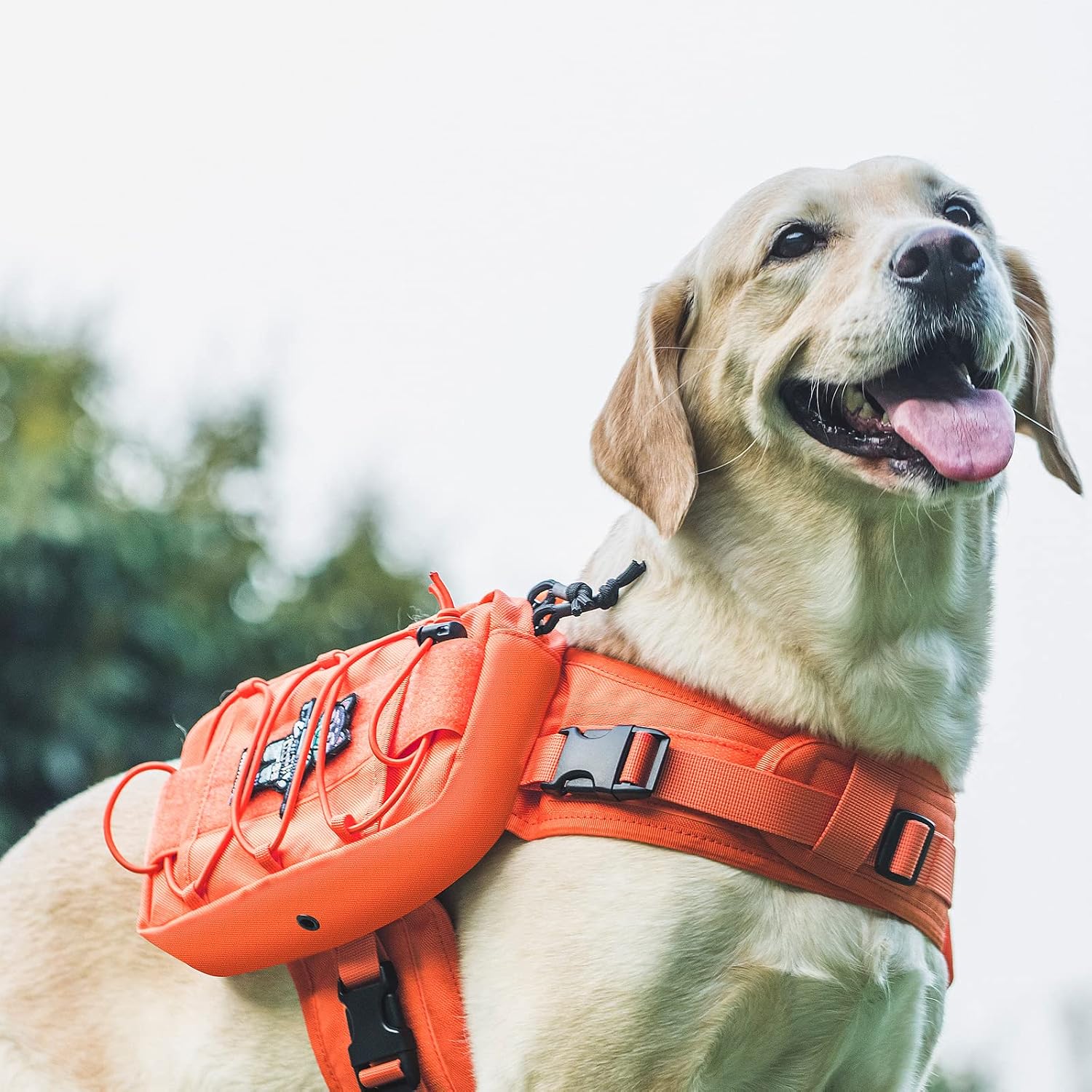
A dog backpack — also called a saddlebag pack, because the pouches hang on either side of the dog’s back like saddlebags on a horse — lets your dog carry their own water, collapsible bowl, and waste bags on trail. That frees up your pack and, more practically, gives an athletic dog a job to do, which can meaningfully reduce pulling and restless energy on long walks. The dual-purpose promise goes one step further: a well-designed pack sits on the dog’s back with a ventral (underside) handle and leash ring, so it can also function as your everyday harness for leash attachment and quick-grab control. That’s a genuinely useful combination — but only if the pack fits your dog’s specific body geometry and holds its adjustment under real load. This guide cuts through the category to help you decide which formats earn that dual-duty role and which are sold on marketing language alone.
The Core Tradeoff: Load Distribution vs. Harness Geometry
Here’s the decision frame practitioners in this category keep returning to: saddlebag packs and no-pull harnesses are optimized for opposite priorities. A saddlebag pack distributes weight laterally across the dog’s ribcage and spine — which means the chest strap and belly girth (the band around the dog’s midsection) are doing structural, load-bearing work. A no-pull harness, by contrast, redirects leash pressure toward the chest or shoulder to discourage forward surging. Those two jobs use overlapping anatomy but different engineering.
The packs that successfully do both share a few spec-level traits: a front D-ring (the metal attachment point on the chest strap, used for front-clip leash control), a dorsal D-ring (on the top of the back panel, for standard leash attachment), and a top-grab handle for physical control in scramble terrain. When all three are present and the strap system is beefy enough to hold tension without creeping, you have a legitimate dual-purpose tool. When one of those is missing — or when the strap hardware is plastic-buckle-only at sub-25mm webbing width — you have a pack with a leash ring bolted on as an afterthought.
By the numbers — minimum specs for dual-duty use:
- Webbing width: 25mm or wider on all primary load straps
- Leash ring: welded steel or aluminum D-ring (not split ring)
- Max load rating: manufacturer-rated at 25–30% of dog’s body weight
- Girth adjustment range: at least 6–8 cm of usable travel to accommodate breathing and muscle flex
Three Packs Worth Knowing, One Format That’s Different
OneTigris Mammoth — The Build-Quality Outlier
The OneTigris Mammoth stands out in aggregated owner reviews for a reason that rarely surfaces in pack categories: at least one reviewer who explicitly sews and evaluates fabric construction praised the stitching and panel construction quality in specific terms. That’s not a casual compliment. Sewers read seam allowance, bar-tack placement, and stress-point reinforcement the way a structural engineer reads a weld — so when one volunteers that a budget-adjacent pack is built correctly, it moves the needle on confidence.
Owners also report that the Mammoth is one of the few packs in this price tier confirmed to fit giant breeds — a Great Dane owner’s review is a notable data point, because giant-breed fit is genuinely rare to find confirmed at the individual reviewer level. Most packs top out at large-dog sizing (roughly 70–90 lb dogs with standard proportions), and giant breeds — Danes, Mastiffs, Irish Wolfhounds — have back lengths and girth dimensions that simply don’t map to those templates.
For dual-purpose use, the Mammoth’s reported strap system and dorsal D-ring make it a workable everyday harness, and the saddlebag pouches are removable on most configurations, which matters if you want a cleaner profile for urban walking. The tradeoff owners consistently note: the pockets are sized for function, not volume — this is a working pack, not a gear-hauler.
Kurgo Saddlebag Harness — The Athletic-Build Benchmark
The Kurgo Saddlebag deserves its own section heading because of how it arrived at its current reputation. Owners report that at least one Pittie/Lab mix owner went through six other pack brands before landing on the Kurgo — and the specific friction point in each failed attempt was the athletic-build chest and shoulder geometry that bully breeds and Lab mixes carry. Wider chests, thicker necks, and muscular shoulders create a fit problem that “medium” sizing papers over without solving.
The Kurgo’s strap geometry addresses this through a wider sternum strap placement and a girth band that sits further back on the ribcage, which gives muscular dogs room to breathe and move without the pack rotating or listing to one side. Per the AKC’s overview of dog backpack selection, proper fit means the chest strap should sit roughly mid-sternum and the belly strap should allow two fingers of clearance — the Kurgo’s adjustment range makes that achievable on body types that defeat narrower-chested designs.
One maintenance heads-up that reviewers consistently flag: strap loosening after the first 3–5 miles of active hiking is a real pattern, not an edge case. The Kurgo’s buckle system — like most compression-style strap hardware — requires a check-and-tighten at the trailhead, and owners report doing a second check around the 45-minute mark on the first run with a loaded pack. This is standard break-in behavior for woven webbing under lateral load, but it catches first-time pack users off guard. The fix is simple: before your first long hike, load the pack to hiking weight, walk 15 minutes, stop, and reset all straps. Per Whole Dog Journal’s pack usage guidance, this “walking break-in” effectively pre-seats the webbing and reduces mid-trail drift significantly.
For dual-purpose use, the Kurgo’s leash attachment options — front and back D-rings on most configurations — make it a genuine harness substitute. The top handle is rated for physical control, and the overall strap architecture is sturdy enough that using it daily without the saddlebags attached doesn’t degrade the harness function.
K9 Sport Sack Air 2 — A Completely Different Category
Position this one clearly before you spend time evaluating it: the K9 Sport Sack Air 2 is a front-facing carrier, not a saddlebag pack. The dog rides inside it, facing forward, with their legs through openings and their weight borne by the handler. Owners report using it on motorcycles and jet skis — use cases that illustrate exactly what it’s designed for and exactly what it’s not. It is not a trail saddlebag. It is not a load-distributing pack. It does not give the dog a carrying job or a workout benefit.
Why mention it here? Because it appears in the same search results and Amazon categories as saddlebag packs, and buyers — especially those shopping for a small or senior dog — occasionally conflate the two formats. The K9 Sport Sack Air 2 is a legitimate, well-reviewed product in its own category: it’s suited for dogs who can’t or shouldn’t walk long distances but need to accompany an active owner. It is not a harness substitute, and it is not built for trail use where the dog is an active participant. If your primary use case is a dog who hikes under their own power and needs to carry gear, this is not your format.
Per Outside Online’s roundup of dog trail gear, the distinction between carrier formats and working pack formats is one of the most common sources of buyer confusion in this category — and the difference in function is total, not marginal.
Measuring for Fit: The Two Numbers That Actually Matter
Most sizing errors in dog packs come from measuring only girth (the circumference around the dog’s ribcage) and ignoring back length — the distance from the base of the neck (withers) to the base of the tail. Both measurements matter, but back length is the one that determines whether the pack’s panel actually sits on the dog’s back or slides onto the hindquarters.
Measure back length with the dog standing square: run a soft tape measure from the prominent bony bump at the base of the neck (the withers) straight back to where the tail meets the body. For most packs, you want the rear edge of the pack’s back panel to sit at least 2–3 inches forward of the tail base to avoid interference with the dog’s hip stride. VCA Animal Hospitals’ exercise guidance notes that restricted hip movement is a common source of fatigue and soreness in dogs carrying packs — a pack that runs too long on a short-backed dog will push directly into that range of motion.
Cross-reference your back length against each manufacturer’s sizing chart, not against weight alone. A 65-lb dog can have a back length anywhere from 18 to 26 inches depending on breed — a Boxer and a Greyhound at identical weights will need completely different pack sizing.
Frequently Asked Questions
How much weight can a dog safely carry in a backpack, and does breed muscle mass change that calculation?
The standard guideline, cited by the AKC and VCA Animal Hospitals, is 10–25% of the dog’s lean body weight — start at 10% for the first few outings and build up. Muscle mass does shift the calculation: a heavily muscled dog (Pitbull-type, working Malinois) can tolerate loads at the higher end of that range more comfortably than a fine-boned dog of equivalent weight. Brachycephalic breeds (Bulldogs, Pugs) and dogs with any orthopedic history should stay at or below 10% and consult a vet before adding pack weight.
Do dog backpack straps loosen during active hiking, and is there a way to prevent it?
Yes — strap loosening during the first few active uses is a documented pattern across nearly all webbing-and-buckle pack systems. The fix is a walking break-in: load the pack to intended carrying weight, walk 15 minutes, stop and re-tighten all straps. Repeat once more. This pre-seats the webbing and significantly reduces mid-trail drift. After break-in, a quick pre-hike check before departure is sufficient for most outings.
Can a dog backpack function as the primary harness for leash attachment, or does the dog need a separate harness underneath?
Packs with welded D-rings on both the chest strap and the dorsal (top) panel — like the Kurgo Saddlebag — are structurally suited to primary harness use. Packs with only a single back-panel ring, or with split-ring hardware, are not designed for leash tension and should be used over a separate harness. Always verify the leash attachment point is a solid welded ring, not a thin clip or plastic loop, before using a pack as your only leash anchor.
What is the difference between a saddlebag backpack and a front-facing carrier, and which is better for trail use?
A saddlebag pack sits on the dog’s back with pouches on each side — the dog carries the weight and walks under their own power. A front-facing carrier (like the K9 Sport Sack format) holds the dog inside the bag, with the handler bearing the weight. For trail use where the dog is an active participant, saddlebag packs are the correct format. Carriers are suited for dogs who can’t or shouldn’t hike independently — small dogs, seniors, or recovering dogs accompanying active owners.
How do I measure my dog’s back length to choose the right backpack size?
Stand your dog squarely on a flat surface. Place a soft tape measure at the withers — the bony prominence at the base of the neck — and run it straight back along the spine to the base of the tail. Record that number in inches or centimeters and cross-reference it against each manufacturer’s back-length column in their sizing chart, not against weight alone. Two dogs at identical weights can differ by 6–8 inches in back length, which corresponds to a full size difference in most pack systems.